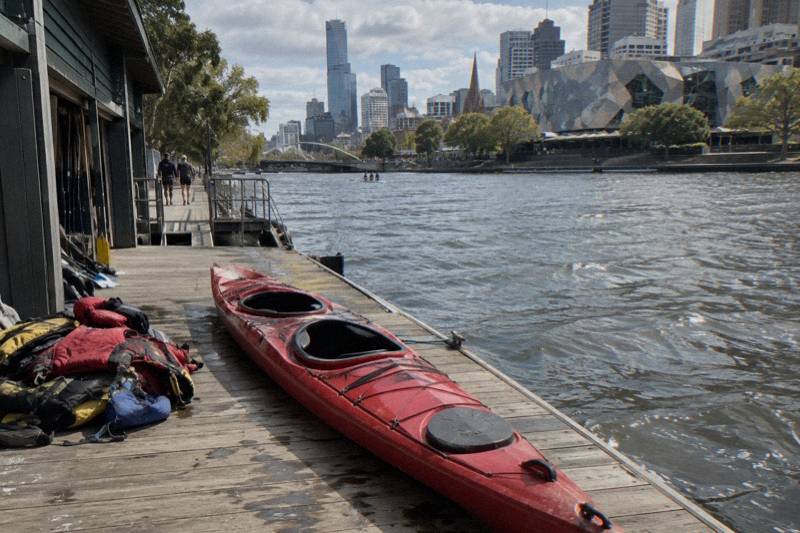
What Are The Three Golden Rules Of Kayaking?
No official body publishes three golden rules, but Victorian safety law and operator practice give three that matter: wear a lifejacket, learn the basics first, and respect the weather.
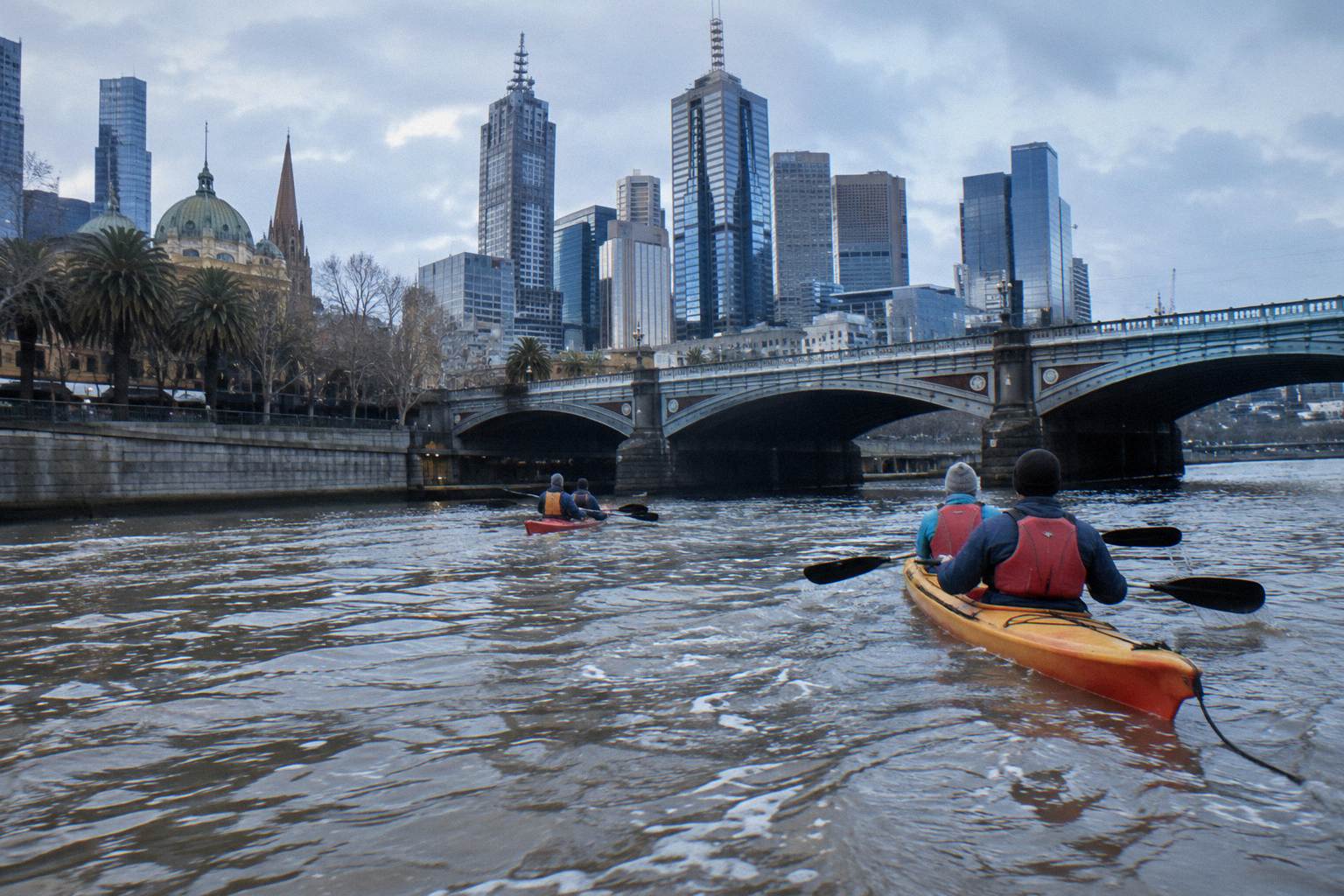
Search for golden rules of kayaking and a dozen lists appear, each with its own numbering. The starting point is that no official body publishes a canonical set of three, and any list that claims authority beyond its own author is overreaching. What does exist is a body of Victorian safety law, and a set of practices that every operator on the water around Melbourne follows. Read together, three rules carry the weight the phrase suggests: wear a lifejacket whenever the kayak is underway, learn the basics before you paddle, and respect the weather and the operator's judgement about whether the trip runs.
Each of those three is backed by something stronger than opinion. The lifejacket rule is law on all Victorian waters, set out by Safe Transport Victoria's kayaks and canoes page. The instruction rule is how every guided trip here actually begins, with a training component before anyone launches. The weather rule is written into the booking conditions of every trip, and the operator always keeps the final call on safety.
For a reader who wants the three rules turned into a first booking, a guided city paddle is the easiest way to practice all of them with someone watching. The three trips below are the CBD formats covered here, from the short daytime paddle to the small-group twilight option.
There is no official set of three, and no authority publishes one. What Victoria does publish is a lifejacket rule that applies to kayaks on every water in the state, and what Melbourne operators practice is instruction before launching and a weather judgement that can end a trip. Those three, the lifejacket, the basics, and the weather, are the rules with rules behind them, and every guided trip on the Yarra and the bay is built around them.
Start with why the question matters. Kayaking looks simple from the bank, and around Melbourne it mostly is: the guided city trips use stable 2-person sea kayaks, the water is sheltered, and no experience is needed. But simple is not the same as rule-free. Victorian law treats a kayak as a vessel with a lifejacket requirement, the operators run a structured start to every trip, and the booking conditions give the operator a safety veto over any departure. A paddler who understands those three things understands the shape of every guided trip on offer.
The rest of any golden-rules list, things like dress for the water not the air, or keep your weight low, are sensible tips rather than enforceable rules, and they are the kind of advice a guide gives on the day anyway. What follows takes each of the three real rules in turn, shows exactly what the law and the operators say, and then shows how the rules look across the actual trips you can book around Melbourne, with their durations, ages and from-prices.
If the goal is simply to get on the water with all three rules handled for you, a guided trip does that by design. The short daytime City Sights paddle runs 1 hour 45 minutes from A$82 per person, is rated 4.9 from 162 reviews, and begins with a training component before the kayak goes in the water. Amounts here are in Australian dollars, and prices vary by date and group, with the price for your date shown during booking.
Rule One: Wear A Lifejacket Whenever The Kayak Is Moving
Yes, from the moment your kayak is underway, Victorian law requires you to wear a lifejacket on coastal, enclosed and inland waters alike. There is no distance-from-shore exemption for kayaks, since the 400 m exemption covers only stand up paddleboards, kiteboards and sailboards, and Melbourne operators supply the lifejacket anyway, so compliance costs nothing but the two seconds it takes to clip it on.
The exact wording from the Safe Transport Victoria kayaks page is worth reading once: "You must wear a lifejacket when paddling crafts such as a kayak, canoe, surf ski, raft, or rowboat." The accepted lifejacket levels for kayaks are Level 100, Level 50 or Level 50S, depending on the water. The exemption that circulates in paddling forums, the idea that you can skip the jacket within 400 m of shore, belongs to stand up paddleboards and sail-driven craft, never to kayaks. That distinction trips up enough people that it is worth saying plainly: if you are in a kayak, the jacket is on.
On guided trips, the rule is invisible because the operator has already absorbed it. Every trip covered here lists safety equipment in its inclusions: Kayak Melbourne includes all paddling equipment on its two city trips, Sea Kayak Australia lists thermals, spray jacket and all paddling equipment on the Twilight Kayak, and the Apollo Bay Seal Kayak lists wetsuits, helmets and PFDs. You do not bring a lifejacket to any of these trips, and you are not asked to judge the conditions yourself. The jacket goes on before launch and stays on until the guide says otherwise.
There is a practical detail worth knowing. The Kayak Melbourne life jackets have a small zip pocket in the front, sized for a phone, so the jacket doubles as storage on the water. The operator also supplies 45 L dry bags for bigger items. Neither detail changes the rule, but both make it easier to live with.
A solo reader wondering about the kayak itself can rest easy on one point: the operator says it does not use single kayaks. The city trips use 2-person fibreglass sea kayaks, and a solo guest is paired with another paddler or with a guide. A parent and child can share one, provided the child meets the trip's minimum age and paddles with a participating adult.
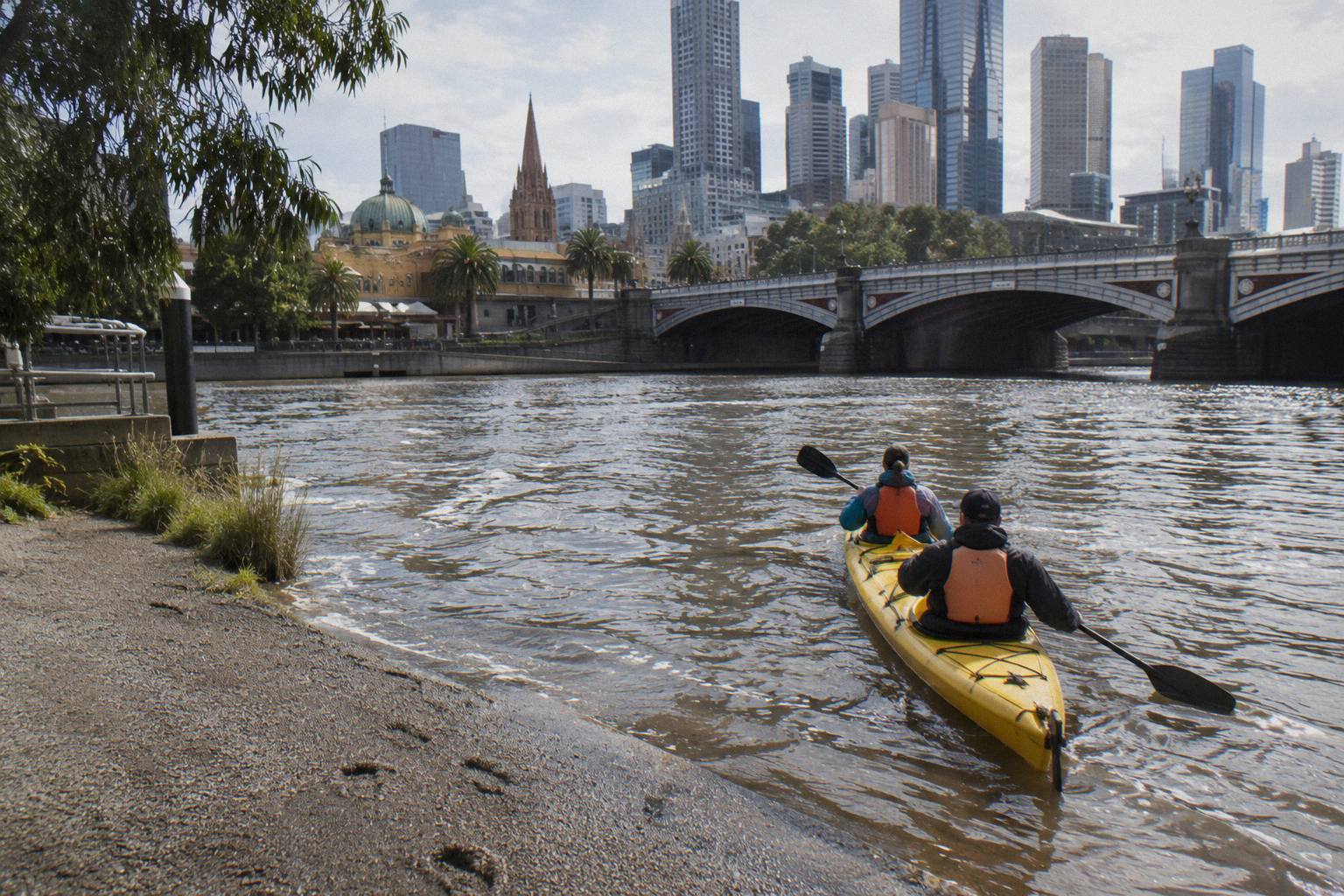
The same law page advises an offshore kit for anyone paddling beyond sheltered water: a phone in a waterproof pouch, a VHF radio or personal locator beacon, first aid, water and food, warm clothing, a repair kit, and practice at capsize recovery. That is the standard for independent paddlers heading offshore, not for a guided city trip, and it is a good illustration of the difference between the two situations. On a guided trip the guide carries the responsibility; on your own, you carry the kit.
Rule Two: Learn The Basics Before You Paddle
Every guided kayak trip around Melbourne begins with instruction, which tells you how the operators rank basic technique. Kayak Melbourne's own answer to whether beginners can join is a single word, "Absolutely", followed by a note that each tour begins with a training component and that anyone somewhat active will be fine. In other words, the second golden rule is not a barrier to entry, it is a built-in part of the first hour of any trip you book.
What the training component covers is the operator's to deliver, and the operator does not publish a syllabus, so the description is a short one: the guide teaches the strokes and the seating and the launching before the group goes anywhere. The kayaks themselves help. Tandem sea kayaks are stable platforms, and pairing a first-timer with an experienced paddler or a guide halves what any one person has to contribute. The operator's FAQ also answers the getting-wet question with a plain statement: "Generally no, you may get a slightly wet midriff or butt if it's very windy or raining."
There is a temptation among beginners to overthink clothing and gear. The operator's guidance is minimal on purpose: bring a water bottle, a sun hat, sunglasses, weather-appropriate clothing and a change of clothes, with a beanie on evening tours, and "No special clothing is required". On the Twilight Kayak, Sea Kayak Australia supplies thermals, a spray jacket and all paddling equipment, plus snacks, drinks and tour photographs by email. The gear list is short because the operator supplies the technical half of it.
For a reader who wants to learn more systematically, there is a longer discussion in where to learn to kayak in Melbourne, and a separate look at whether kayaking is hard for beginners. The short version of both: the guided format is itself the beginner course, and the trips that advertise themselves for first-timers mean it.
The small-group format deserves a word, because instruction scales with attention. The Twilight Kayak runs 2 hours 30 minutes from A$110 per person, is rated 4.9 from 86 reviews, and takes up to 20 paddlers with a professional guide and commentary. Sea Kayak Australia states that it operates in most weather conditions, with an alternative date or a full refund if it cancels for poor weather. It suits a paddler who wants the learning to come with an evening on the water rather than a daytime drill.
Rule Three: Let The Weather And The Operator Decide
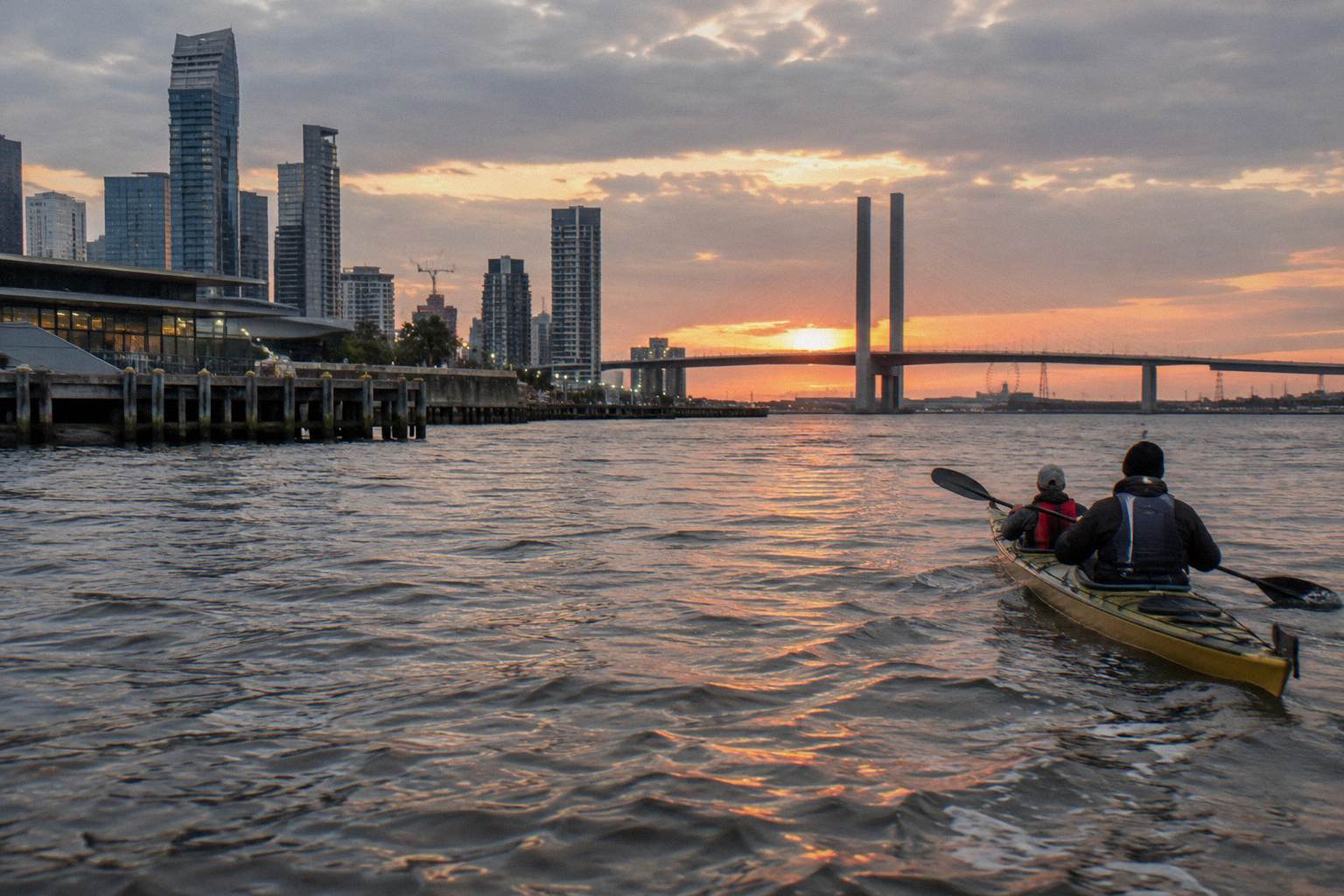
The tour runs rain, hail or shine, but Kayak Melbourne reserves the right to cancel if it is unsafe, and an operator cancellation comes with a refund or a reschedule. Your own changes are different: give at least 24 hours notice, and inside that 24 hour window there are no refunds, so the weather call belongs to the operator and the clock belongs to you.
The two halves of that rule matter equally. The first half means you should not cancel a booking yourself at the first sign of cloud: the booking pages for the Sunset Kayak With Dinner and the City Sights Kayak say those trips are subject to favourable weather, with an alternative date or a full refund if the operator cancels for weather. The Twilight Kayak's page says the same in its own words. The other trips covered here state no weather policy, so for those the booking page is the place to check before you commit.
The second half is the one that costs people money. Guest changes need at least 24 hours notice, and the operator's FAQ is blunt: "No refunds will be given for cancellations within 24 hours". Free cancellation up to 24 hours before departure applies to all eight trips covered here on their booking pages, which makes the 24-hour mark the single most important number in the whole booking.
What actually cancels a trip is the operator's call, and no fixed weather threshold is published. A reader planning around winter or shoulder-season dates can look at the numbers the Bureau of Meteorology records for Melbourne Olympic Park: a mean maximum of 26.8 °C in January against 14.5 °C in July, and 88.4 rain days of a millimetre or more across the year on the 2013 to 2026 record. Nothing in those numbers stops a kayak trip, and none of them promises one either. The full picture is in what happens if a Melbourne kayak trip is cancelled for weather.
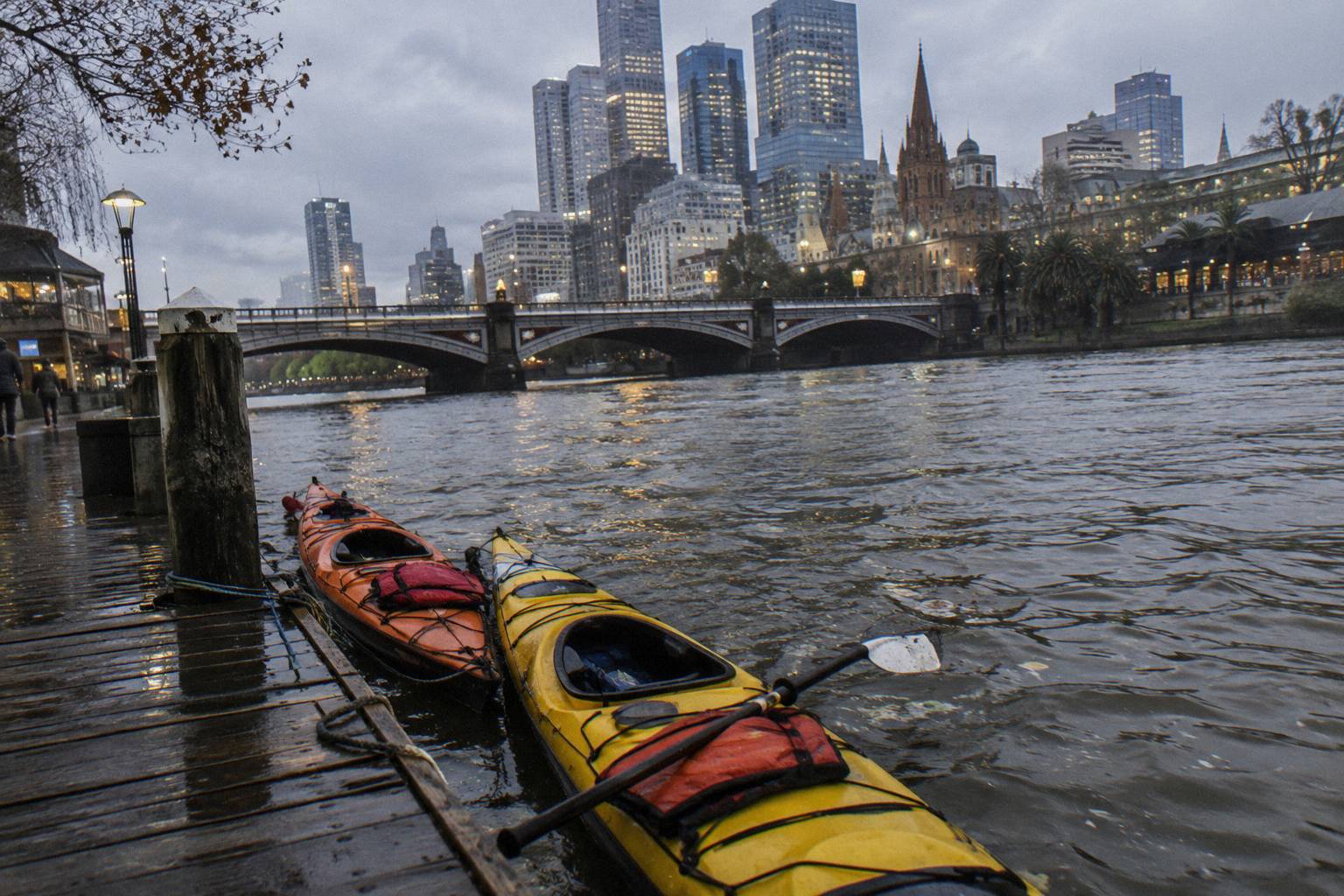
The bay trips add one more layer: wildlife rules that exist whether or not any animal appears. Victorian wildlife rules prohibit boats within 100 m of a dolphin, prohibit swimming within 30 m of one, and make touching or feeding seals and dolphins illegal. Operators frame every sighting as an opportunity, never a promise, and the Dolphin Sanctuary trip's own wording is "the opportunity to spot" Burrunan dolphins, Australian fur seals and fairy penguins. More on that in whether you can see seals from a kayak near Melbourne.
| Rule | What backs it | What it means on a guided trip |
|---|---|---|
| Wear a lifejacket underway | Safe Transport Victoria, all Victorian waters, no kayak exemption | Operator supplies and fits the life jacket; it stays on for the whole paddle |
| Learn the basics first | Operator FAQ and every trip's training component | A short instruction session before launch; no experience needed to book |
| Respect the weather | Operator weather statement and 24-hour change rule | Trips run in ordinary weather; the operator can cancel for safety; your changes need 24 hours notice |
How The Three Rules Look Across Real Trips
Across Melbourne's guided trips, the three rules hold identically in principle and differently in detail: the lifejacket never changes, the instruction shifts with the water, and the weather stakes climb as trips move away from sheltered city water. A Wonga Park whitewater paddle, a Portsea sea kayak and a Yarra city paddle share the same law and the same 24-hour cancellation clock, yet each asks something different of a first-timer, as the table below sets out.
The Yarra CBD trips are the gentlest application of all three rules. The City Sights Kayak runs 1 hour 45 minutes from A$82 per person, takes paddlers aged 10 and over, and meets at Boathouse Drive by the Richmond Rowing Club, with self-arrival and no hotel transfer. The Sunset Kayak With Dinner runs 3 hours from A$120 per person, is the trip with the most reviews at 4.9 from 196, takes paddlers aged 12 and over, meets at the Community Boating Hub wharf at Docklands, with dinner included. Both are Kayak Melbourne trips, and the operator supplies everything on the water.
| Trip | Duration | From price per person | Minimum age | Group size |
|---|---|---|---|---|
| City Sights Kayak, Yarra CBD | 1 hour 45 minutes | A$82 | 10 | Up to 18 on the booking page |
| Sunset Kayak With Dinner, Docklands | 3 hours | A$120 | 12 | Up to 18 on the booking page |
| Twilight Kayak, Small Group | 2 hours 30 minutes | A$110 | 12 | Up to 20 |
| Yarra Whitewater Kayaking, Wonga Park | 3 hours | A$109 | 10 | Ask the operator |
| Yarra Canoe Wildlife Paddle, Fairfield | 2 hours | Shows during booking | Ask the operator | Small group of 10 |
| Dolphin Sanctuary Sea Kayak, Mornington Peninsula | 3 hours | Shows during booking | Ask the operator | Up to 24 |
Beyond the city, the same rules carry more weight. The Yarra Whitewater Kayaking at Wonga Park, run by The Adventure Merchants, is fully guided with a lifevest and helmet supplied, GoPro mounts on every helmet, and a shuttle back to your car; it states a maximum weight of 120 kg and a minimum age of 10. The Dolphin Sanctuary Sea Kayak at Portsea, run by Bayplay, is a 3-hour sea kayak toward Point Nepean with a half-way beach stop, a driver-guide, and all safety equipment including life jackets, in groups of up to 24. The Apollo Bay Seal Kayak, further afield at Marengo, is about 3 hours from Melbourne, and its inclusions read like a rule list in themselves: an hour and a half of instruction and touring, qualified guides, sit-on-top kayaks, surf safety and ocean awareness instruction, and wetsuits, helmets and PFDs, with Australian fur seal viewing and no extra charges.
That last line is the clearest illustration of rule two anywhere on the water: an operator whose product leads with instruction. Wildlife on any of these trips is an opportunity to spot, never a promise, and the reader should treat any guarantee of dolphins, seals or penguins as a signal to keep looking.
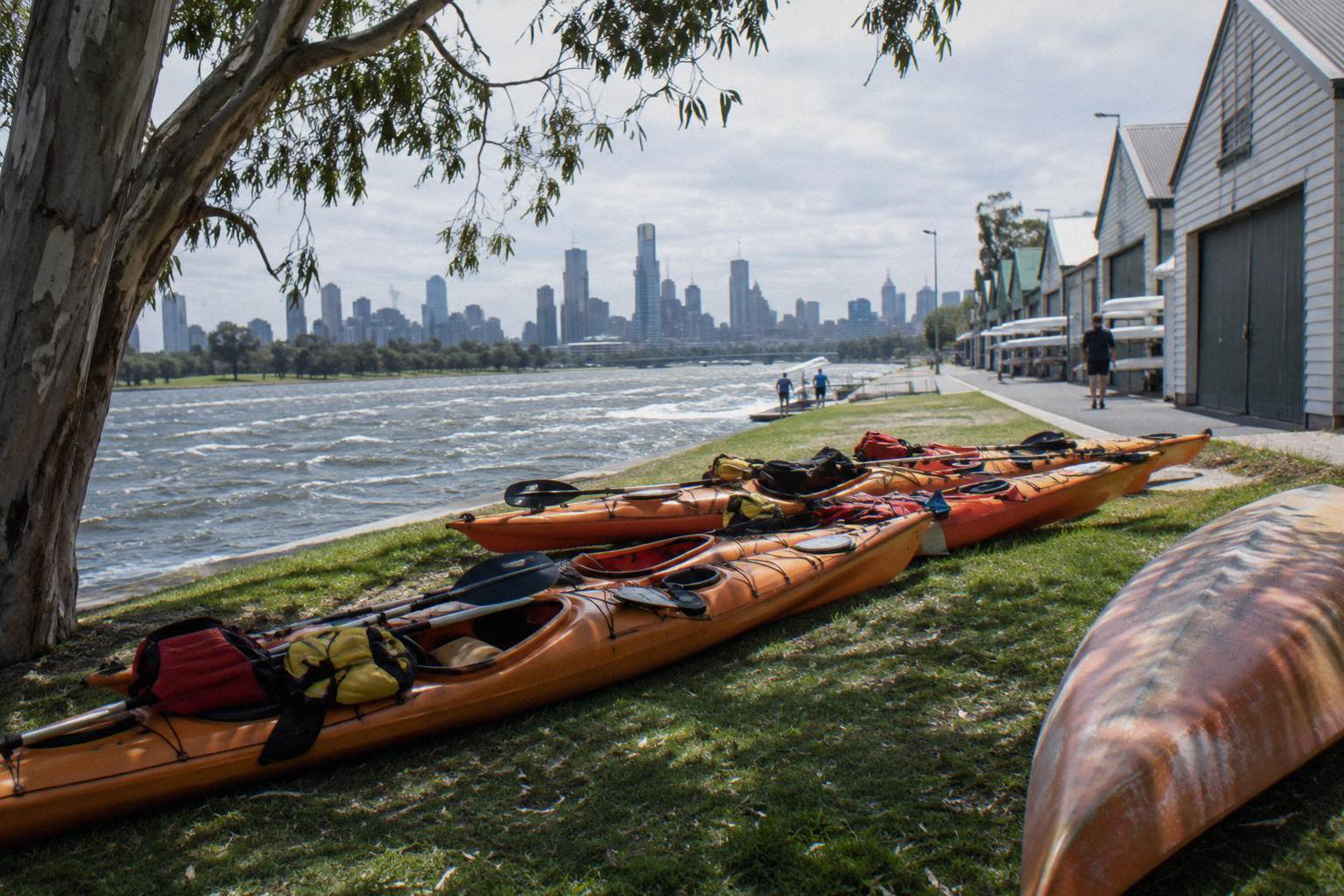
For sea trips beyond the city, Melbourne Kayak Tours also covers the Mornington Peninsula and the Great Ocean Road options. The bay has its own rules worth knowing before you go: Port Phillip Bay carries a transit only zone from Point Gellibrand at Williamstown south to latitude 38 S, where small boat operators must not anchor, moor, drift or fish, and the shipping channels are flagged as high hazard with advice to exercise caution and steer well clear. Guided trips route around all of that, but an independent paddler should know it exists.
What Trips People Up Before A Paddle
Most trouble comes from three assumptions: that hotel pickup is included, that the minimum age is the same on every trip, and that the 24-hour free-cancellation window starts whenever you decide to cancel. In reality, none of the eight trips includes hotel pickup, each sets its own minimum age, and the free-cancellation clock expires 24 hours before departure. One final trap: swimming in the Yarra, which CBD bylaws prohibit.
The pickup point is worth a second read. All eight trips are self-arrival at their own meeting places: Boathouse Drive for the two Kayak Melbourne city trips and the Twilight Kayak, the Wonga Park launch for the whitewater paddle, Fairfield Park Drive for the canoe wildlife paddle, the Portsea store for the Dolphin Sanctuary, Sorrento Pier for the swim trips, and Marengo for the Apollo Bay seal kayak. The evening dinner trip meets at Docklands,. The canoe paddle is the one trip where you will want to check the booking page for what is covered.
Ages need the same care. The booking pages state 12 and over for the Sunset Kayak With Dinner and the Twilight Kayak, 10 and over for City Sights, the whitewater paddle and the Apollo Bay Seal Kayak, and the operator FAQ frames it as 10 and over recommended for daytime trips and 12 and over for evening trips, with minors paddling alongside a participating adult. The remaining trips publish no minimum age, so ask the operator for those. A fuller breakdown is in the minimum age for a kayak trip in Melbourne.
Money mistakes cluster around the price display. Every figure quoted anywhere in a booking is a from-price in Australian dollars that varies by date and group, and four of the eight trips show their price only during booking. There is no child, group or private rate to be found by searching, and no sum or average worth constructing. The booking page for your date is the only price that exists.
The last trap is the water itself. The CBD stretch of the Yarra has swimming bylaws, and Melbourne Water's Yarra Watch monitoring shows E. coli readings that swing with rainfall, so paddling is secondary contact only and a dip is never part of the plan. The details live in whether the Yarra is safe to kayak.
A short checklist of questions to put to any operator before booking covers all of this: the departure point and finish point for your date, the minimum age for the trip, what the price for your date includes, what happens if the operator cancels for weather, and whether there is anything about the day's conditions you should know. Operators answer these questions routinely, and the answers are shorter than the regret of booking the wrong meeting point.
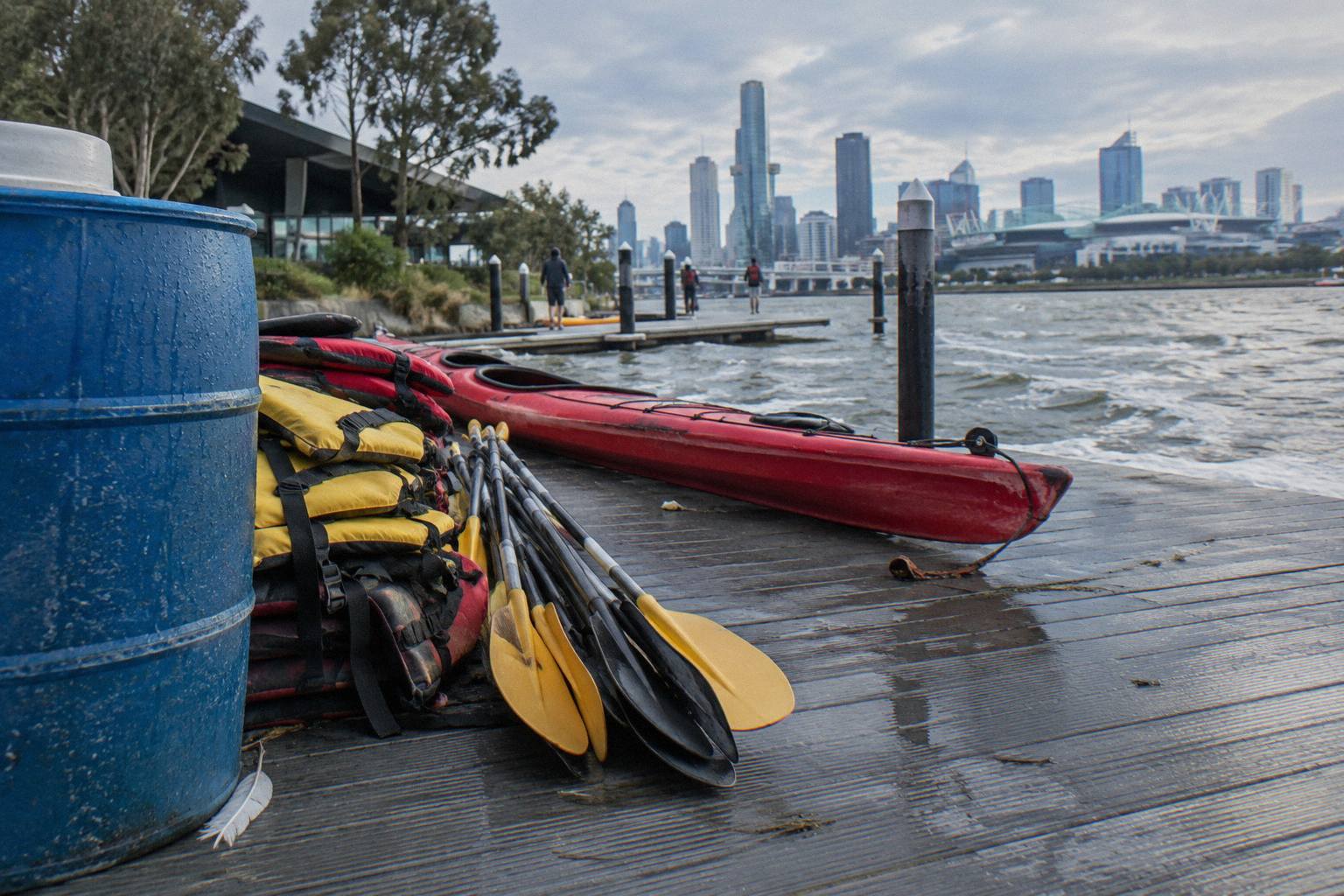
For a first paddle that handles all three golden rules within a single booking, the City Sights format is the natural fit: guided, instructed, equipped, timed at 1 hour 45 minutes, and open to paddlers aged 10 and over. Check the City Sights Kayak trip page for dates, or check availability for the operator's live calendar.
The evening alternative applies the same rules to a longer canvas. The Sunset Kayak With Dinner is a 3-hour paddle from Docklands with dinner on the water, timed around the Crown fire show in the operator's "in the Gas Brigades" wording, though no fire show time is published and nothing about it is promised. Kayak Melbourne's FAQ answers the practical questions on its FAQ page, including the tandem policy, the gear list and the weather statement that tours run rain, hail or shine.
Common Questions About Kayak Rules In Melbourne
What Are The Three Golden Rules Of Kayaking?
No official body publishes a set of three. The three rules with authority behind them in Victoria are: wear a lifejacket whenever the kayak is underway, which is law on all Victorian waters; learn the basics before you paddle, which every guided trip builds in as a training component; and respect the weather, meaning the operator's safety judgement governs whether a trip runs.
Do I Need To Bring My Own Life Jacket?
No. Every trip covered here includes safety equipment in its inclusions, from the city paddles to the sea kayak at Portsea and the seal kayak at Marengo. The jacket is supplied, fitted, and worn for the whole paddle, as Victorian law requires for kayaks with no distance-from-shore exemption.
Can Beginners Join A Guided Kayak Trip?
Yes. Kayak Melbourne's answer to the beginner question is "Absolutely", with each tour beginning with a training component, and the operator adds that anyone somewhat active will be fine. The Twilight Kayak and the bay trips follow the same pattern: instruction first, then the paddle.
What Happens If The Weather Turns Bad?
The operator decides. Kayak Melbourne says its tours run rain, hail or shine but reserves the right to cancel if it is unsafe, offering a refund or a reschedule when it cancels. The booking pages for the city and twilight trips promise an alternative date or a full refund on a weather cancellation by the operator.
How Late Can I Cancel Or Change A Booking?
Free cancellation up to 24 hours before departure applies to all eight trips on their booking pages. Inside 24 hours the operator gives no refunds, and changes need at least 24 hours notice, so the day before your departure time is the practical deadline for any change of plan.
Can I Swim In The Yarra On A Kayak Trip?
No. The CBD stretch of the Yarra has swimming bylaws, and Melbourne Water's Yarra Watch shows water quality that varies with rainfall. Paddling is secondary contact only, and no trip involves getting in the water for a swim.