Is The Yarra Safe To Kayak On? Water Quality Explained
Kayaking the Yarra through central Melbourne puts you on a river whose water quality changes with the rain, and whose CBD stretch bans swimming outright. Here is what Melbourne Water actually measures, what the bylaws say, and what it all means for a paddle.
Short answer
Swimming is banned in the CBD Yarra by bylaw and E. coli at the Kew monitoring site has ranged from 74 to 6,500 organisms per 100 mL against a 260 swimming guideline. Kayaking is secondary contact only, and the guided trips supply life jackets, a training component and guides. Check the daily Yarra Watch forecast and the trip's weather policy before booking.
Kayaking on the Yarra through central Melbourne is a different question from swimming in it, and the two answers do not resemble each other. Melbourne Water runs a monitoring program called Yarra Watch that tests E. coli at four sites along the river, and the numbers move sharply with rainfall: at the Kew site, which Melbourne Water says "tells us what conditions are like in the CBD", readings have ranged from 74 to 6,500 organisms per 100 mL against a 260 guideline for swimming. Swimming in the CBD stretch is prevented by bylaws. Kayaking is a different activity in the eyes of both the bylaws and the monitoring framework, because paddling is secondary contact: you sit in a boat above the water rather than in it.
If the water question is the last thing between you and a booking, the three Yarra trips below are the ones to compare first.
What Is Actually Measured In The Yarra River Water?
Melbourne Water and the EPA measure E. coli bacteria, the standard indicator organism, because it signals how much stormwater and animal waste has washed into the Yarra. Testing happens at four sites, Launching Place, Healesville, Warrandyte and Kew, with results published daily through Yarra Watch against a swimming guideline of 260 organisms per 100 mL.
That range is the single most useful fact for a paddler. A river that reads 74 one day can read thousands after a downpour, because the stormwater system drains into it. Melbourne Water's framing is direct about what the Kew number means: it "tells us what conditions are like in the CBD". So the figure a city paddler should watch is the Kew figure, on the day, via the daily forecast on the Melbourne Water Yarra Watch page.
| Monitoring site | Where it sits on the river | What it tells you |
|---|---|---|
| Launching Place | Upper Yarra, far upstream of the city | Conditions in the rural catchment |
| Healesville | Upper Yarra, upstream of the suburban stretch | Conditions above the main urban runoff |
| Warrandyte | Mid Yarra, where suburbia begins to thicken | Conditions entering the metropolitan reach |
| Kew | Lower Yarra, closest monitored site to the CBD | Melbourne Water says it "tells us what conditions are like in the CBD" |
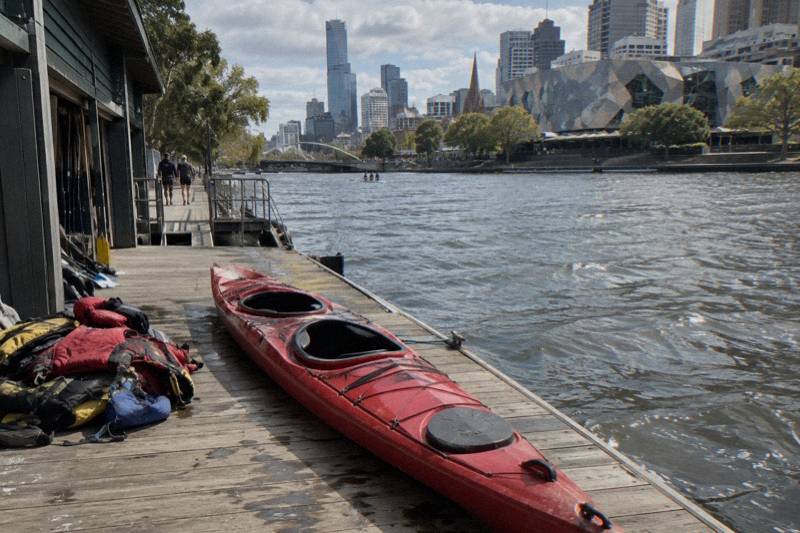
None of this is a reason to stay off the water. It is a reason to understand what kind of contact a kayak trip involves. A paddler sits in a sealed hull, above the waterline, wearing a life jacket. Water reaches you if wind or rain splashes it, and the Kayak Melbourne FAQ is specific: "Generally no, you may get a slightly wet midriff or butt if it's very windy or raining." That is the realistic worst case of water contact on a guided city paddle, and it is the contact the whole monitoring discussion should be weighed against.
Why Swimming Is Banned But Kayaking Is Not?
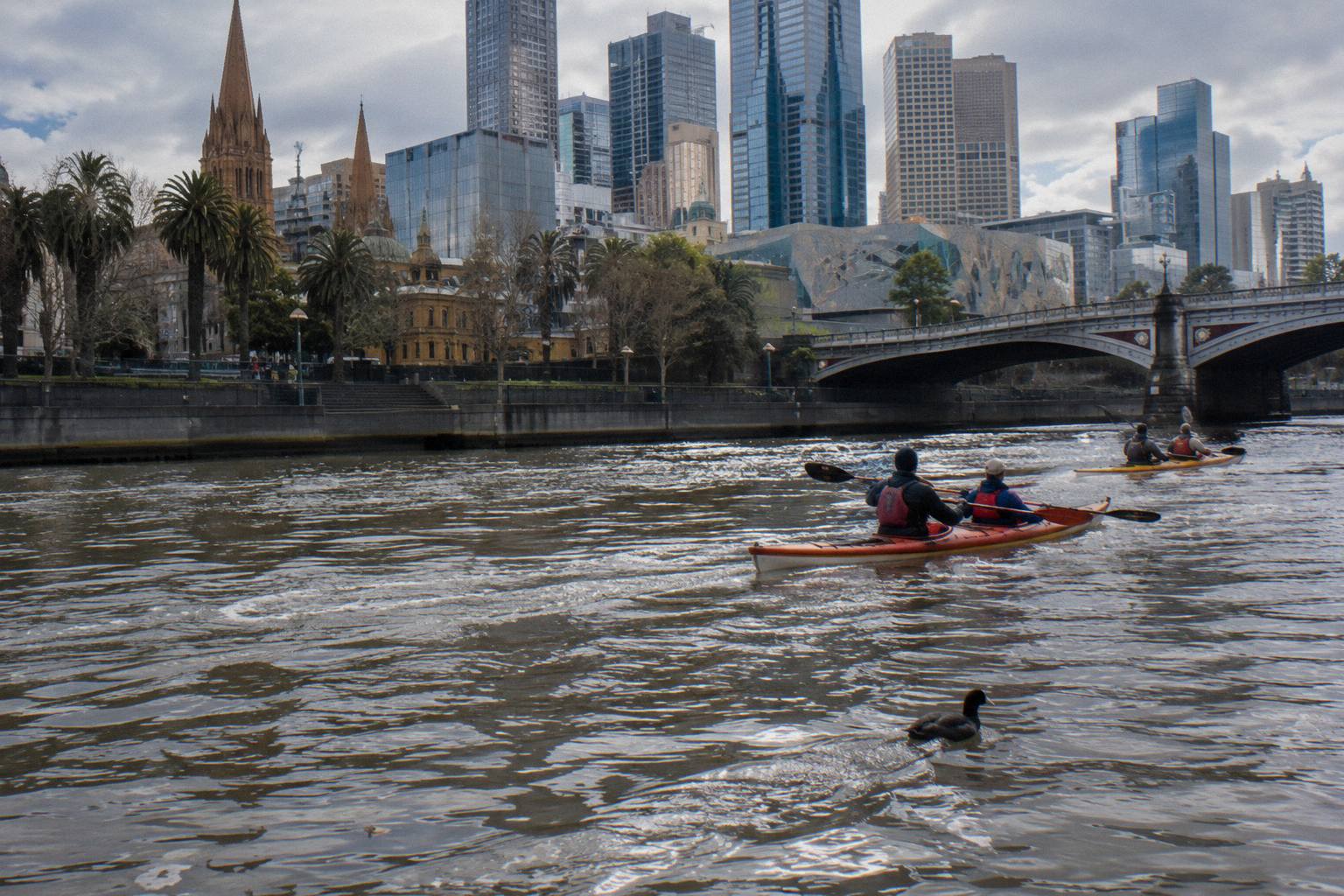
Swimming is banned in the CBD section of the Yarra because Melbourne Water bylaws treat it as unsafe: water quality shifts with rainfall in ways no sign on the bank can keep up with. Kayaking escapes the ban because paddling counts as secondary contact, keeping your body in a boat above the water rather than immersed in it.
The bylaw matters more than any single E. coli reading. A river can pass the 260 guideline on a dry Tuesday and blow past it after a storm, and a swimmer has no way of knowing which day they picked. Melbourne Water's own communication leans on this variability: the daily forecast exists precisely because yesterday's number does not describe today's water. So the rule for the CBD stretch is simple and it applies to everyone: no swimming, no wading, no dipping. A kayak trip does not ask you to do any of those things.
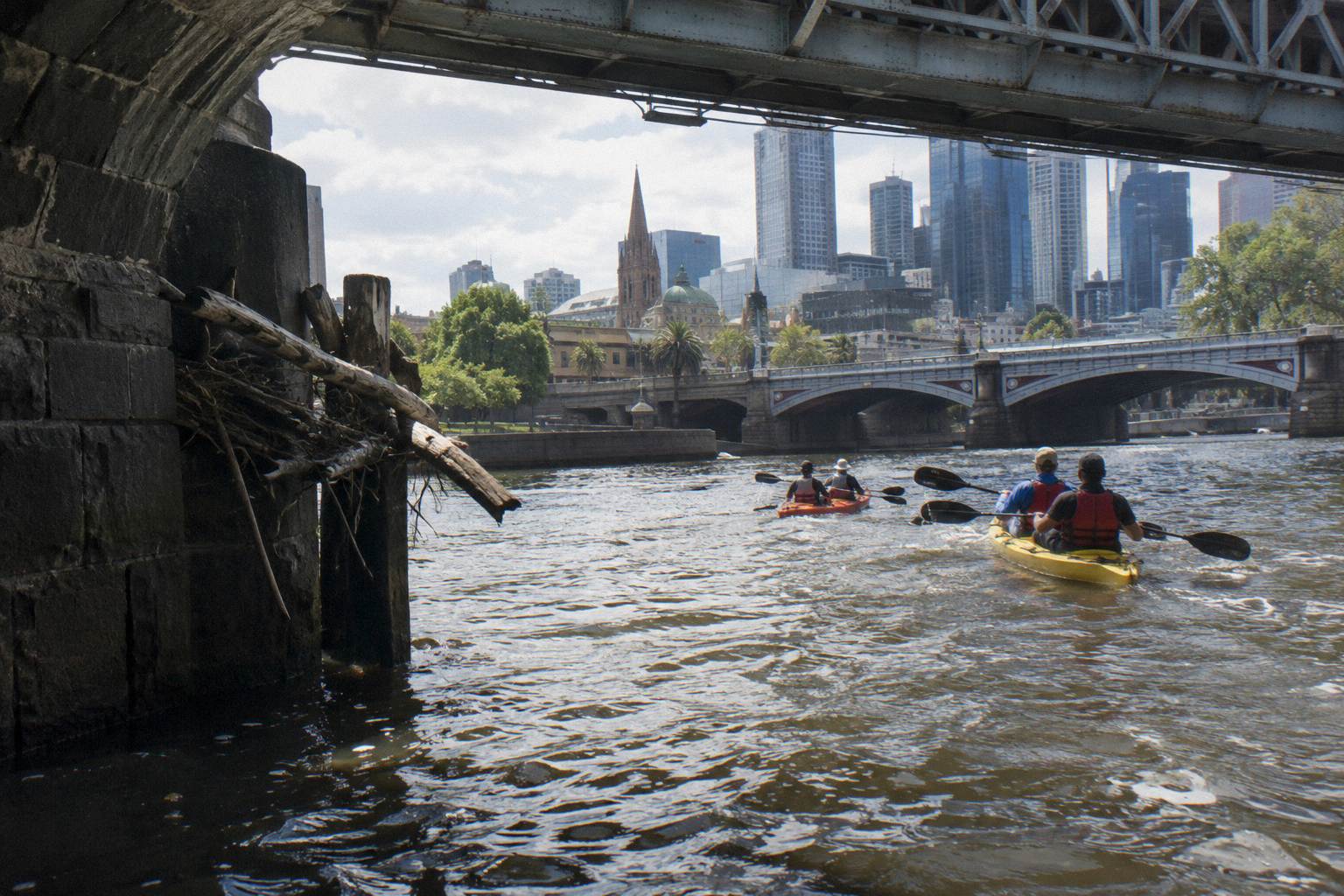
What a kayak trip does ask of you is smaller and better defined. You sit down into a 2-person fibreglass sea kayak, the operator states "We do not use single kayaks", and solo guests are paired with another paddler or a guide. Every trip begins with a training component before the paddle starts. Life jackets are supplied and, under Victorian rules, they are not optional: Safe Transport Victoria says "You must wear a lifejacket when paddling crafts such as a kayak, canoe, surf ski, raft, or rowboat", and that rule covers coastal, enclosed and inland waters with Level 100, Level 50 or Level 50S jackets. The Safe Transport Victoria kayaks and canoes page sets out the full detail.
One trap deserves its own sentence, because it catches people who half-remember the rules: the exemption that lets some paddleboarders skip the jacket within 400 m of shore applies to stand up paddleboards, kiteboards and sailboards only. It never applies to kayaks. On a guided trip the point is moot anyway, since the operator supplies the life jackets and fits them.
Who Checks The Water, And What Should A Paddler Check?
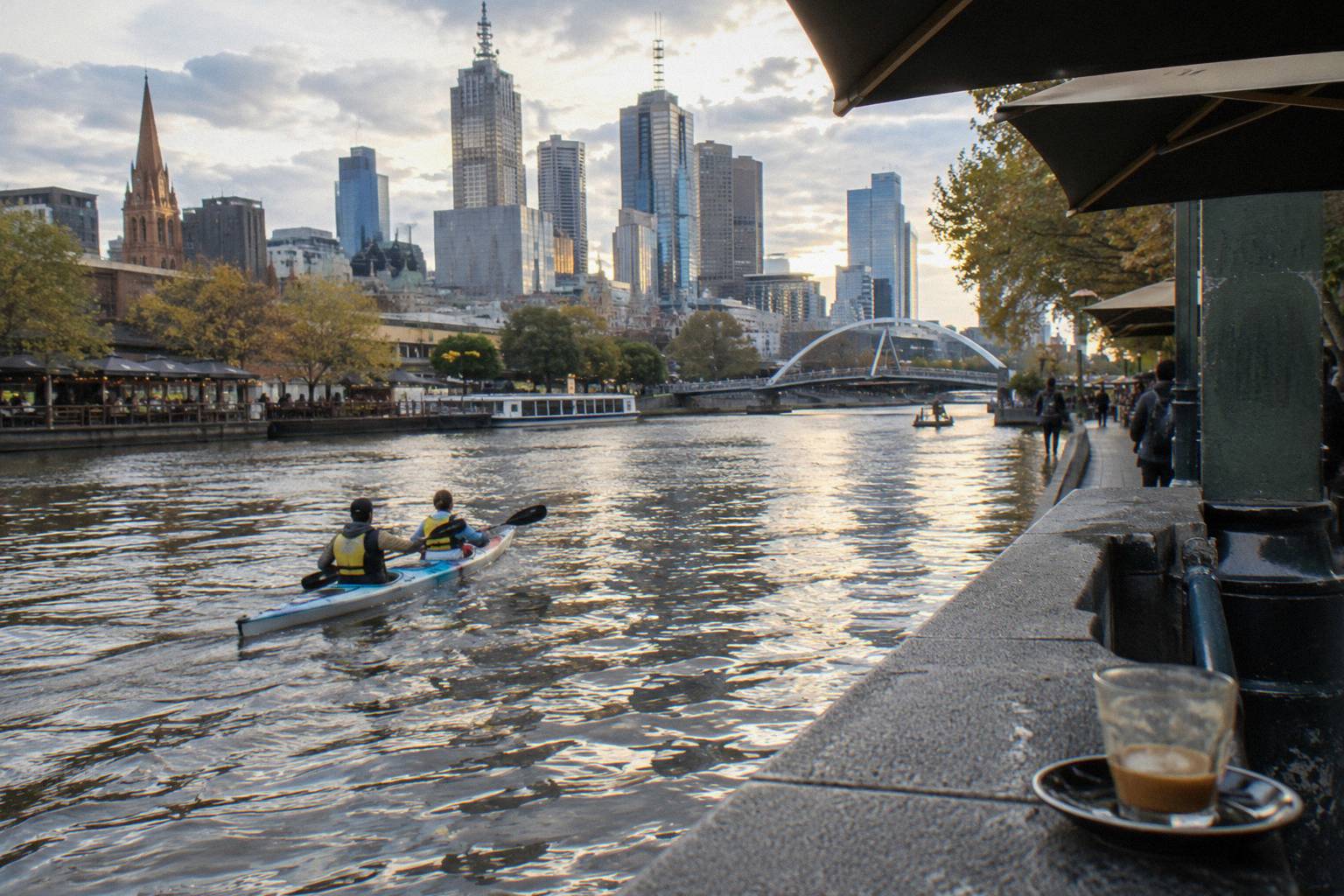
Melbourne Water and the EPA monitor the water through Yarra Watch, which issues a daily forecast, and a paddler should check the Kew reading plus the rainfall from the day or two before a trip. For bay trips, the EPA Beach Report posts daily forecasts for named Port Phillip Bay sites at 3:00pm, using ratings such as "Good, stormwater pollution unlikely".
The daily-forecast structure is the part worth internalising. There is no season when the Yarra is reliably fine and no season when it is reliably poor; there are only dry days and wet days, and the forecast is the bridge between them. Rain is the driver, and Melbourne's rainfall is spread across the year: the Bureau of Meteorology's Olympic Park station records an annual 577.7 mm over 88.4 rain days, with October the wettest month at 68.0 mm on average and February the driest at 26.3 mm. Four or five rain days a month is normal in most months, so a forecast check the day before a booking is a reasonable routine rather than an act of caution.
| Source | What it covers | What a paddler does with it |
|---|---|---|
| Melbourne Water Yarra Watch | E. coli at four Yarra sites, daily forecast, Kew as the CBD read | Check the Kew figure and recent rainfall before a city paddle |
| EPA Beach Report | Daily water quality forecasts for named Port Phillip Bay sites, updated at 3:00pm | Check your specific bay site and day for a peninsula trip |
| Bureau of Meteorology, Olympic Park | Temperature and rainfall averages for Melbourne | Set expectations for the weather a trip runs in |
| Safe Transport Victoria | Lifejacket wear, kayak equipment and waterway rules | Confirm the gear rules that apply on any paddle |
The EPA Beach Report link is worth having even for a river-focused reader, because it covers the alternative: if the Yarra forecast is poor after rain, the bay trips on the Mornington Peninsula are a different waterway with their own daily rating, published on the EPA Beach Report page for sites from Altona to Blairgowrie.
How Do The Trips Handle Rain And Weather Cancellations?
Kayak Melbourne runs its tours rain, hail or shine, though it reserves the right to cancel any trip deemed unsafe, and in that case you get a refund or a reschedule. City Sights Kayak and Sunset Kayak With Dinner are subject to favourable weather, while Twilight Kayak goes ahead in most conditions, and either way an operator cancellation means an alternative date or a full refund.
The 24-hour rule is the other half of the picture. Every one of the eight trips carries free cancellation up to 24 hours before departure on the booking page, and Kayak Melbourne asks guests changing a booking for at least 24 hours notice, with no refunds for cancellations inside that window. So the genuine financial risk sits in a narrow band: if you cancel inside 24 hours, or if weather forces the operator's hand, the money is handled by refund or reschedule rather than lost.
| Trip | Weather wording on the booking page | If cancelled for weather |
|---|---|---|
| City Sights Kayak, Yarra CBD | Subject to favourable weather | Alternative date or full refund |
| Sunset Kayak With Dinner, Docklands | Subject to favourable weather | Alternative date or full refund |
| Twilight Kayak, Small Group | Operates in most weather conditions | Alternative date or full refund |
| Other five trips | No weather policy stated on the booking page | Ask the operator when you book |
One clarification does real work here: "rain, hail or shine" is the operator's own statement, and it still allows a safety cancellation. It is not a promise that a trip runs no matter what, and it should not be read as one. The decision on any given day belongs to the operator, on safety grounds, with your money protected either way. For a deeper treatment of the cancellation mechanics, see what happens if a Melbourne kayak trip is cancelled for weather.
The water-quality angle ties back in neatly. A high E. coli reading after heavy rain will often coincide with the kind of weather that makes a paddle unpleasant rather than unlawful, and the operator's safety judgement covers the same days the forecast flags. The two checks, forecast and booking-page policy, point at the same window of days.
Will You Touch The Water On A Guided Paddle?
Realistically, very little. The Kayak Melbourne FAQ says "Generally no, you may get a slightly wet midriff or butt if it's very windy or raining", and everything else about the trip design keeps you above the water: 2-person fibreglass sea kayaks, fitted life jackets, a training component before launch, and guides on the water with you. Dinner on the evening trip is eaten seated in the kayak, tied up at a marina, not on a bank.
That design is the practical answer to the water-quality question. Secondary contact means hands and maybe a sleeve, and the operator supplies 45 L dry bags for anything you carry, plus a small zip pocket in the life jacket front for a phone. Bring a change of clothes if the forecast is wet, which the operator lists among what to bring along with a water bottle, sun hat, sunglasses and weather-appropriate clothing. No special clothing is required.
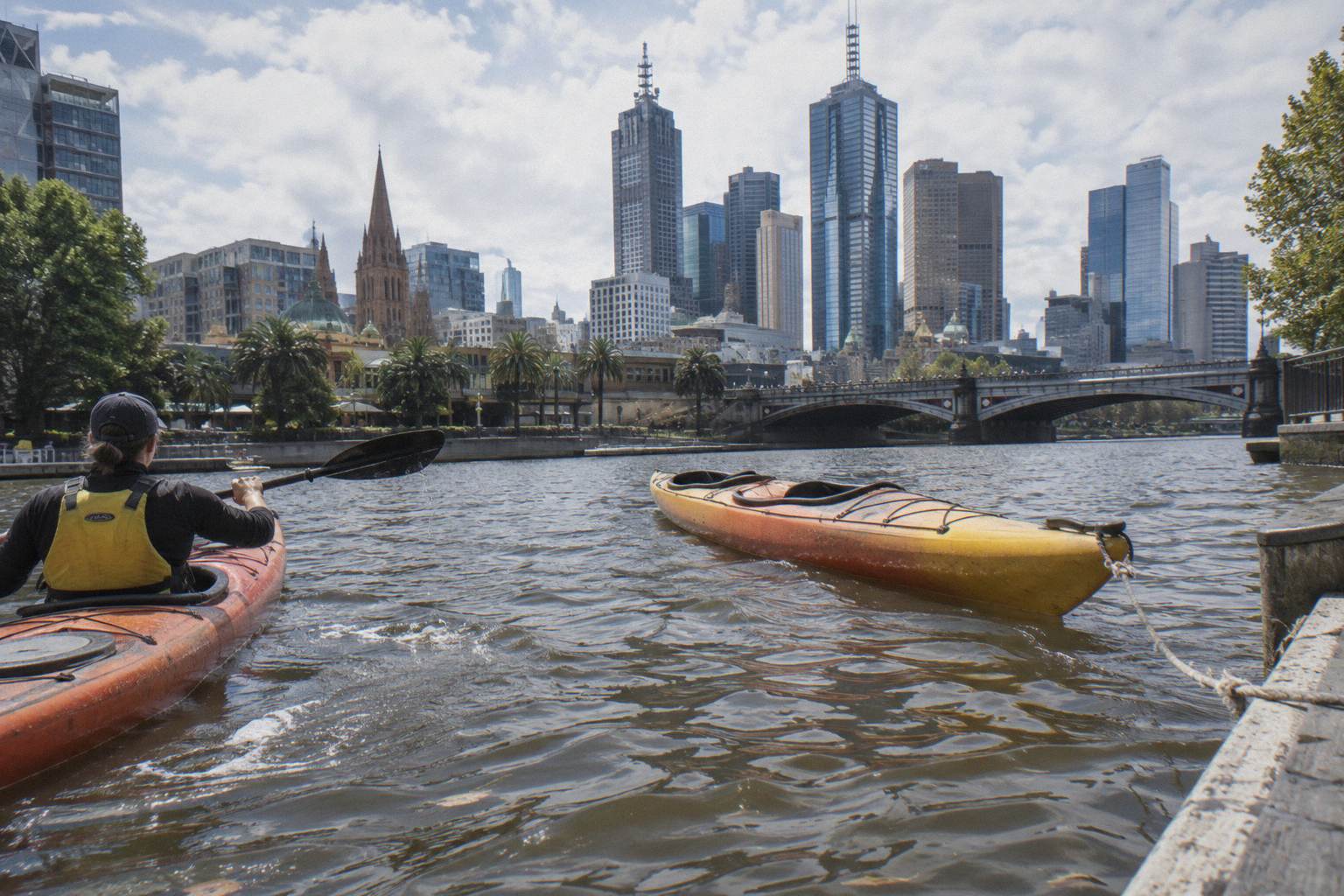
The getting-wet question deserves its own reading rather than a guess, and whether you get wet on a Melbourne kayak trip covers it in full. The short version for a cautious reader: the water stays outside the boat in normal conditions, and the worst stated case is a damp midriff in wind or rain.
What Do The Rules Require Beyond The Lifejacket?
Beyond a worn lifejacket, Safe Transport Victoria's offshore equipment advisory for kayakers calls for a phone in a waterproof pouch, a VHF radio or personal locator beacon, first aid, water and food, warm clothing, a repair kit, and practised capsize recovery. On Port Phillip Bay, a transit only zone from Point Gellibrand at Williamstown south to latitude 38 S bars small boat operators from anchoring, mooring, drifting or fishing, and shipping channels are flagged as a high hazard.
For a guided trip, the operator carries the equipment burden: the options show life jackets included on every trip, helmets and wetsuits on the trips that need them, and guides throughout. The transit only zone and channel caution matter to anyone imagining a self-guided bay paddle, and they are part of why a guided product is the simpler first experience of Port Phillip. Licence and registration questions have their own answers, and the rules and exemptions are set out on the Safe Transport Victoria kayak page rather than summarised loosely here; whether you need a licence to kayak in Victoria works through them.
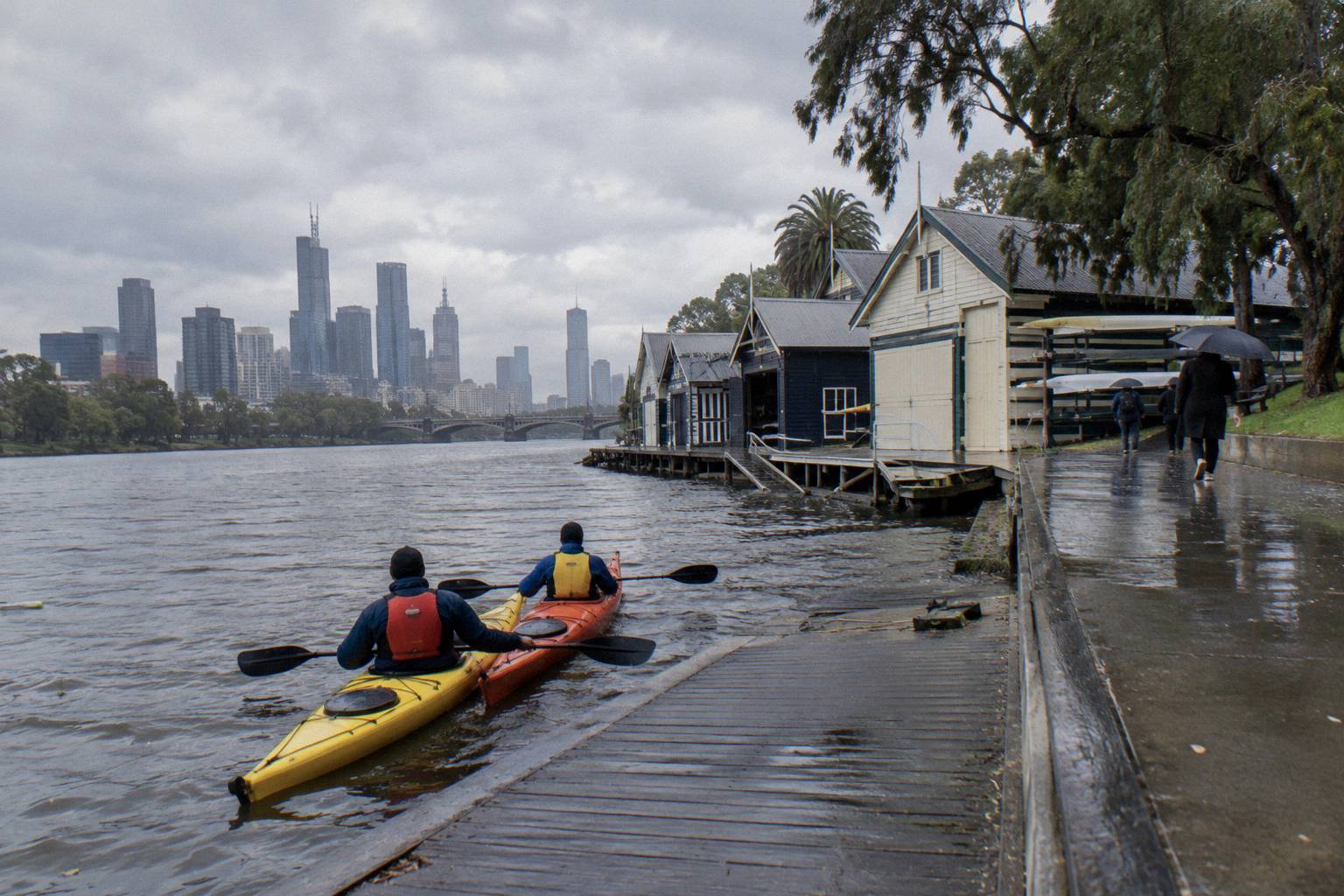
The gear rules do not change with the water quality, which is a quiet reassurance: the same lifejacket requirement applies on a dry, clear day and on a wet one, so the safety baseline is constant even when the E. coli number moves. What moves with the water is the forecast, and what moves with the forecast is the operator's go or no-go call, backed by the refund policy above.
Which Trip Fits A Cautious First-Time Paddler?
For a cautious first-time paddler, City Sights Kayak is the best fit: it is the shortest commitment at 1 hour 45 minutes, costs from A$82 per person, is rated 4.9 from 162 reviews, and includes a guide plus all paddling equipment. If that feels comfortable, the 2 hours 30 minutes Twilight Kayak and the 3-hour Sunset Kayak With Dinner are gentle step-ups.
All amounts are in Australian dollars, and each price is a from-price that varies by date and group, with the exact figure shown during booking. The three trips are not rivals: two of them are Kayak Melbourne products on the same river with different formats, and the third is a different operator on the same water with a smaller-group format and its own gear list.
The decision logic is mostly about duration, age and time of day. A family with a 10 or 11 year old is looking at day trips, since Kayak Melbourne's evening tours ask for 12 and over and day tours 10 and over. Someone who wants the shortest first exposure to the water takes City Sights. Someone who wants a meal on the river and a longer evening takes the dinner trip. Someone who wants more included gear for a cold evening, thermals and a spray jacket rather than just a spray jacket option, looks at Twilight.
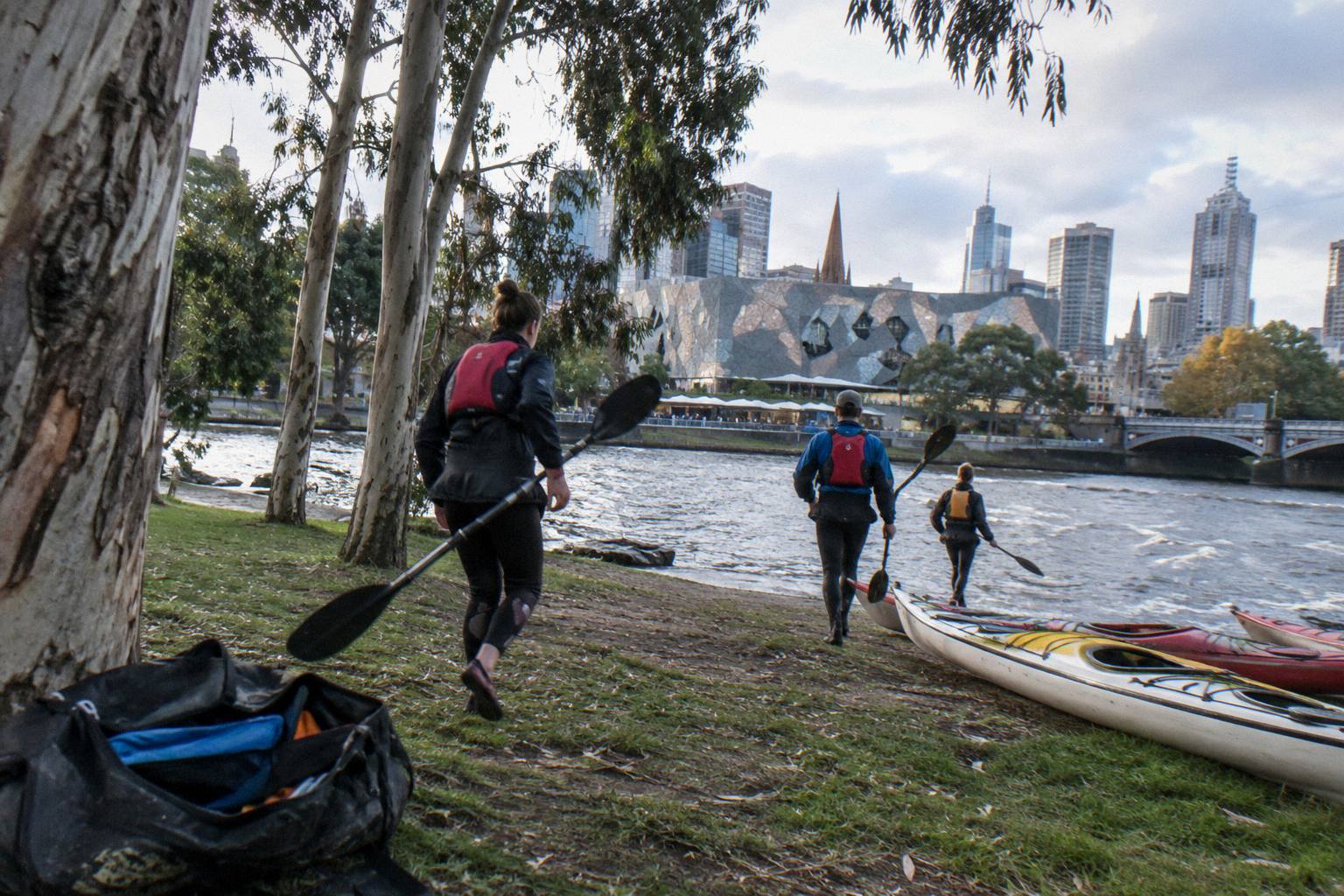
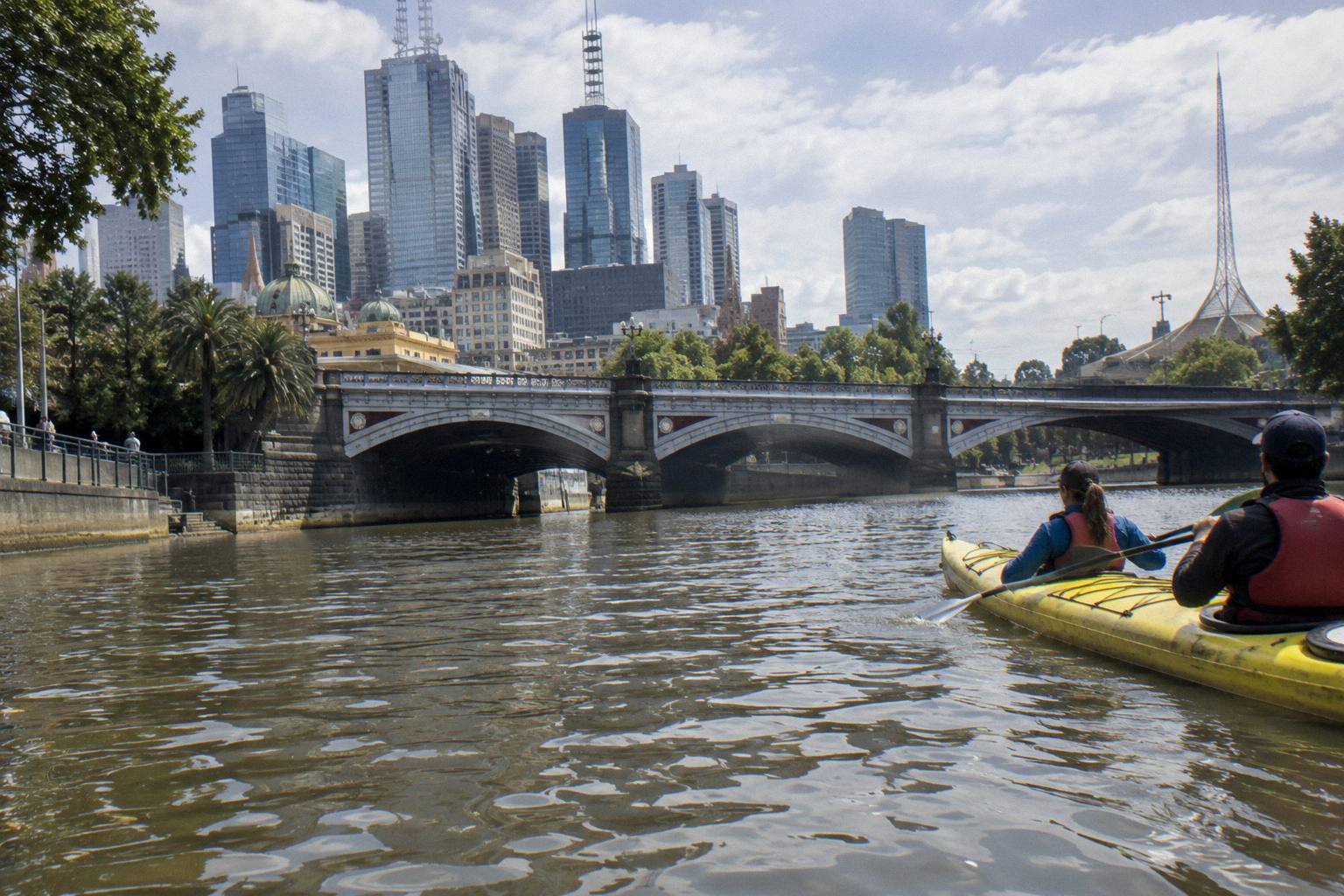
For the reader whose caution is specifically about the water, a day trip has two quiet advantages: the booking page's favourable-weather wording, and daylight to see the whole paddle. The beginners' guide to kayaking in Melbourne covers the first-timer mechanics, and kayak safety in Melbourne waters covers the gear and rules side. If the day trip is the one that fits, the City Sights Kayak tour page has the meeting point at Boathouse Drive next to Princes Bridge, a 5 minute walk from Flinders Street station, and you can check availability for your date before locking anything in.
For a fuller comparison of the river products, including the whitewater and canoe options outside the CBD, the Yarra River kayaking guide walks the whole waterway, and whether the Yarra is safe to kayak covers the legality question from the access angle.
What To Ask The Operator Before You Book?
Before booking, ask the operator five things: what the Kew forecast has done in the days before your date, what the weather-cancellation outcome is for your specific trip, what the minimum age and group size are, what gear is supplied versus what you bring, and where exactly the trip meets and ends. Most trips state an answer to each, and one message at booking time closes any gaps.
The meeting-point question matters more than it sounds, because the addresses differ by trip and mixing them up costs real time. Evening tours, including the dinner trip, meet at the Community Hub at The Dock, 912 Collins St, Docklands, one minute from tram stop D18. Check the live booking page for full trip details. Day trips, including City Sights, start and end at Boathouse Drive next to Princes Bridge, across the Yarra from Federation Square. There is no single address for all trips, and there is no hotel pickup: every trip is self-arrival.
On group size, the two Kayak Melbourne booking pages show up to 18 participants, while the operator's FAQ gives a maximum of 20 for regular tours; the pages differ, so ask if the number matters to you. The Twilight Kayak page shows up to 20. Ages are per trip: 10 for City Sights, 12 for the two evening Kayak Melbourne trips, 12 for Twilight, 10 for the whitewater trip. The canoe paddle at Fairfield takes up to 10 people; ask the operator about its minimum age when you book.
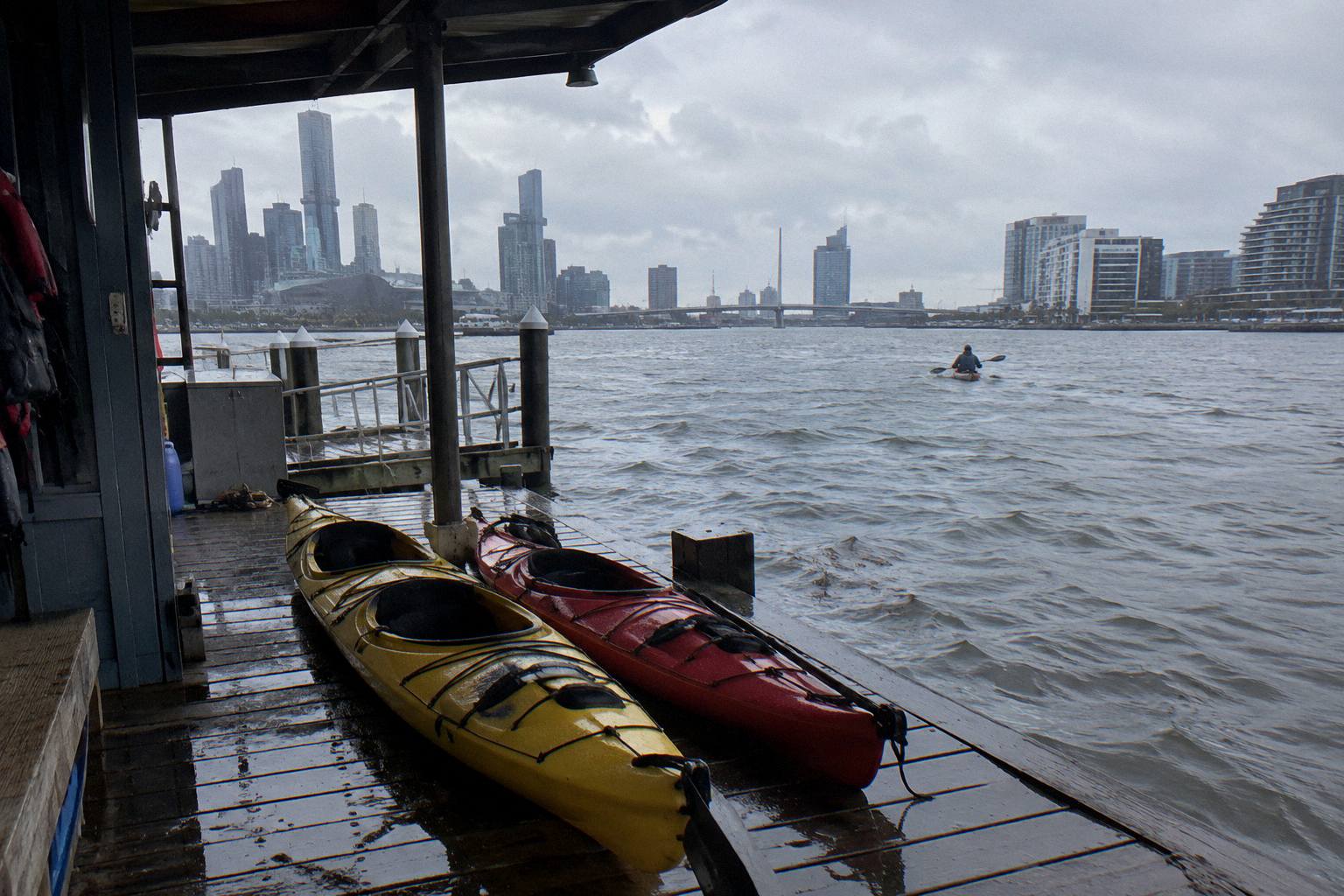
A worked example shows how the pieces fit together. Suppose a couple books City Sights for a Saturday in late spring, checks the Kew forecast on Thursday, sees a dry week, and books with the 24-hour free cancellation in hand. Friday brings a storm; the Saturday Kew reading jumps, the river is high, and the operator calls the trip unsafe. The booking page's wording gives an alternative date or a full refund, the couple takes the Sunday instead, and the Sunday forecast is clear. Nothing in that chain required the couple to judge the water themselves; the forecast told them what was coming and the policy caught the rest. That is the system working as designed.
Common Mistakes When Booking A Yarra Kayak Trip?
The mistakes that catch people out are assuming one meeting address covers every tour, treating a from-price as the full per person cost, taking "rain, hail or shine" to mean no trip is ever cancelled, assuming the same minimum age across trips, and expecting to swim or wade at a stop. In reality, every tour has its own meeting point, prices vary by date, free cancellation ends 24 hours out, and minimum ages range from 10 to 12.
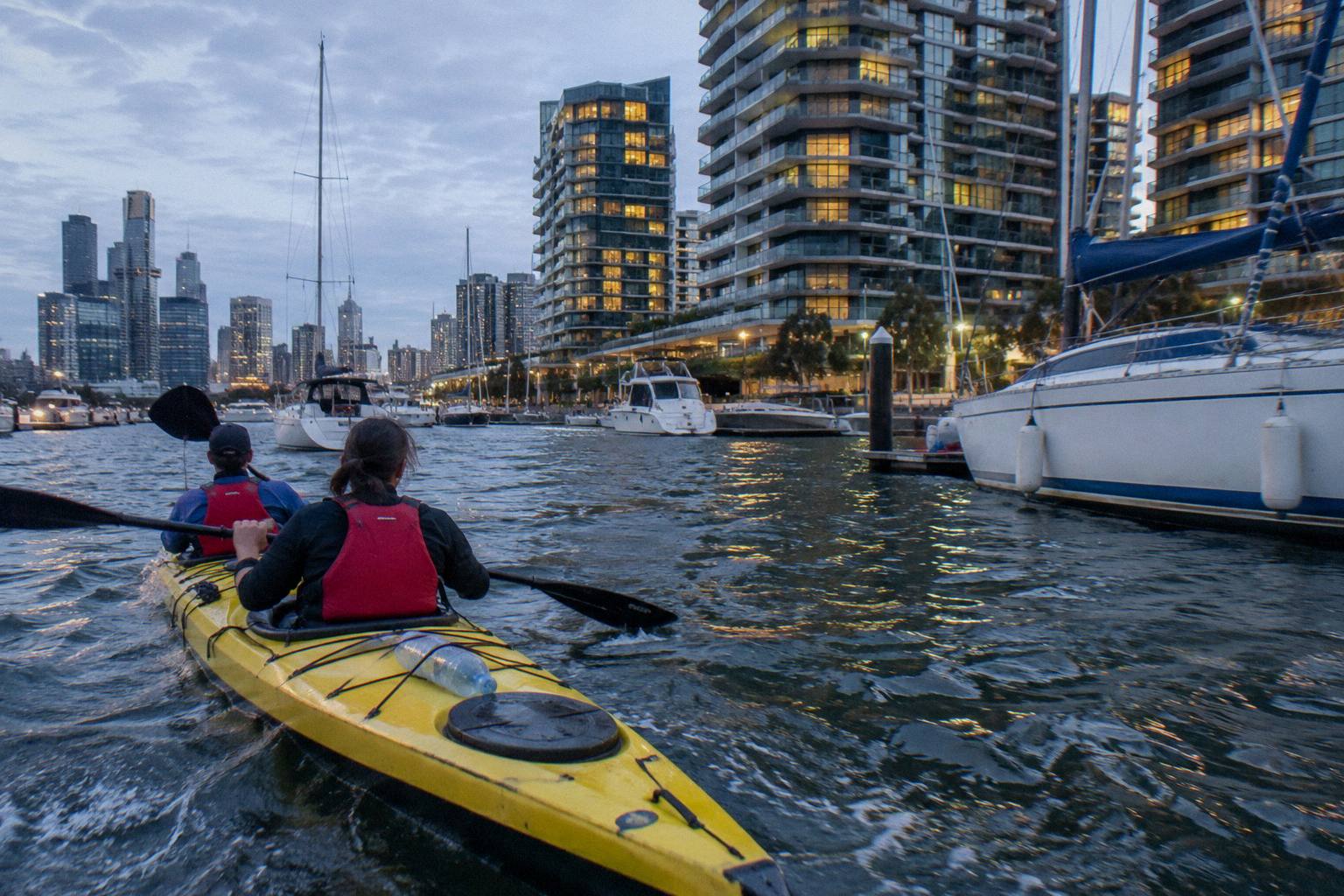
The dollar-figure mistake deserves the plainest treatment. A from-price of A$82 per person is a floor, not a quote, and the figure for a specific date shows during booking. Never read a from-price as the total for two people, never convert it in your head to another currency, and never add child or group prices you cannot see. The swimming mistake is the one to cut off at the source: there is no stop on a CBD trip where getting in the water is allowed, the bylaws prevent it, and the trips are not designed around it. Dinner on the evening trip is eaten seated in the kayak at a marina, which is the opposite of a beach stop.
The weather mistake runs the other direction: some readers take "rain, hail or shine" to mean the operator never cancels, and the phrase does not promise that. The operator reserves the right to cancel if it is unsafe, and the refund or reschedule follows. And if the worry is cold rather than wet, whether it is cold on the water treats the clothing question in full, with the operator's own line that no special clothing is required and a change of clothes is worth bringing. For the wider framing of paddling on this river with a guide, Melbourne Kayak Tours covers the Yarra products from the CBD day paddle to the evening dinner run.
Common Questions About Yarra Water Quality And Kayaking
Is The Yarra Safe To Kayak On?
Swimming is banned in the CBD stretch by bylaw, but kayaking is secondary contact only: you sit in the boat above the water. Melbourne Water monitors E. coli at four sites and says the Kew site "tells us what conditions are like in the CBD", with readings that can vary dramatically day-to-day due to rainfall. Check the daily Yarra Watch forecast, wear the supplied life jacket, and keep every part of the trip out of the water.
Can You Swim In The Yarra River In Melbourne?
No. Melbourne Water says "The CBD section of the Yarra is one of those places" where bylaws prevent swimming, and the water quality varies with rainfall, with E. coli at Kew having ranged from 74 to 6,500 organisms per 100 mL against a 260 swimming guideline. Kayak trips on the CBD stretch do not include swimming or wading stops.
Does Rain Affect Yarra River Water Quality?
Yes. Melbourne Water states quality "can vary dramatically day-to-day due to rainfall", because stormwater drains into the river. The Yarra Watch daily forecast reflects this, and the Kew reading is the one that describes CBD conditions. Heavy rain in the day or two before a trip is the main thing to look for.
Will You Fall In Or Get Wet On A Guided Yarra Kayak Trip?
The Kayak Melbourne FAQ says "Generally no, you may get a slightly wet midriff or butt if it's very windy or raining". Trips use 2-person fibreglass sea kayaks, begin with a training component, and supply life jackets. For the fuller answer see whether you get wet on a Melbourne kayak trip.
Where Is Yarra Water Quality Monitored?
Melbourne Water and the EPA monitor E. coli at four sites: Launching Place, Healesville, Warrandyte and Kew. Kew is the site that reads the CBD. For bay waters, the EPA Beach Report publishes daily forecasts for named Port Phillip Bay sites, updated at 3:00pm.
Do The Kayak Trips Get Cancelled For Water Quality?
The stated cancellation trigger is safety, not a published water-quality threshold. Kayak Melbourne says "The tours run rain, hail or shine; however, we reserve the right to cancel a tour if it is unsafe", and its two CBD booking pages are subject to favourable weather with an alternative date or a full refund if the operator cancels. No fixed threshold is published; the operator decides on the day.