Is It Common To Fall Out Of A Kayak On A Guided Trip?
No capsize statistic exists for guided Melbourne kayak trips, but the facts point one way: 2-person sea kayaks, a training component before you paddle, life jackets worn on every Victorian water, and calm river routes in the city.
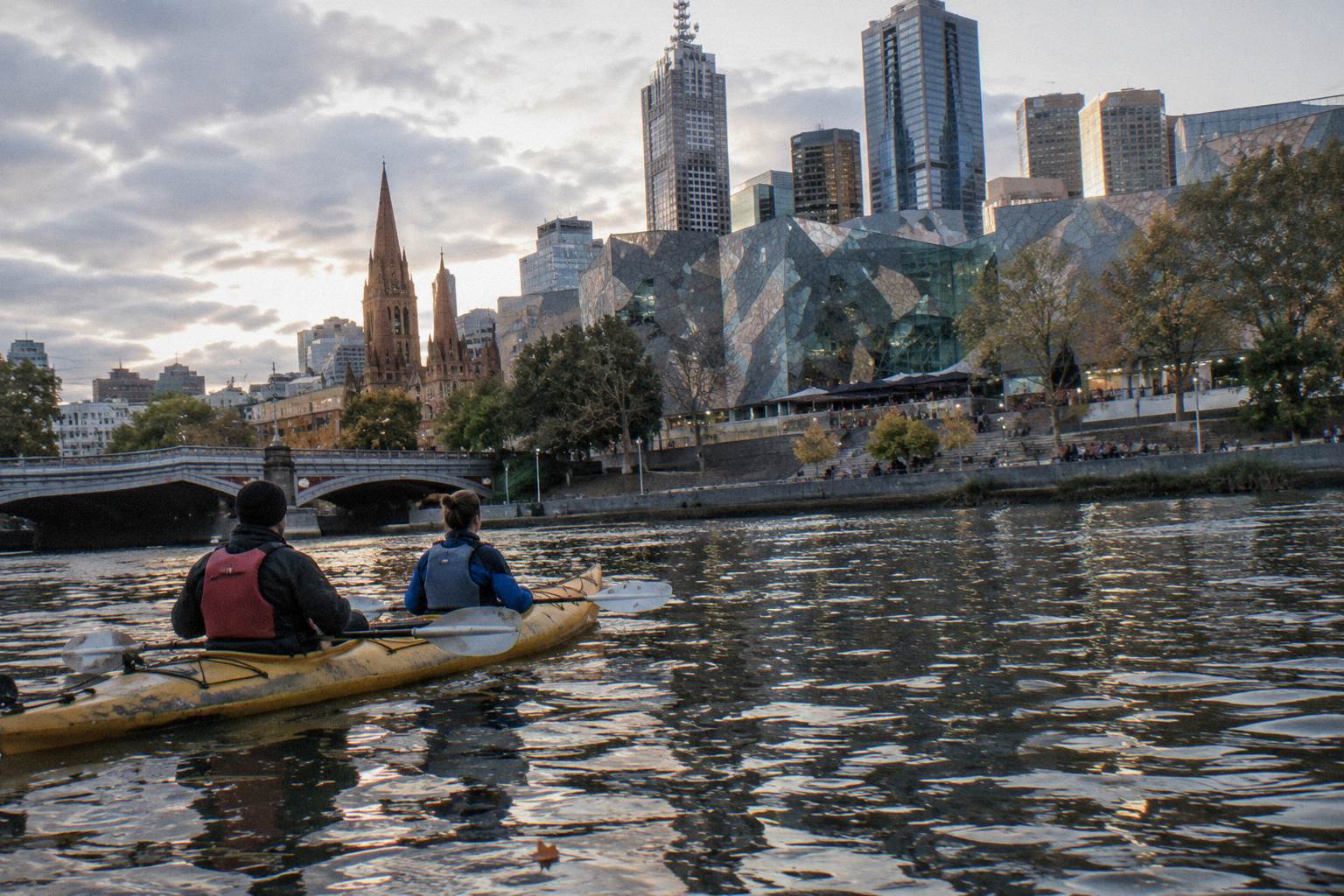
In short: no operator publishes a capsize rate for guided trips in Melbourne, so no frequency claim can be made either way. What is stated: the city trips use 2-person fibreglass sea kayaks that Kayak Melbourne says it prefers over single kayaks, every trip begins with a training component, a life jacket is worn at all times under Victorian law, and the operator's own FAQ says guests on its river tours generally do not get more than a slightly wet midriff. The one whitewater trip adds a helmet.
For the river formats side by side, start with the Yarra River kayaking guide; for the sea side of the question, the Port Phillip Bay water temperature and conditions guide covers the bay trips.
No, falling out is not common on guided Melbourne kayak trips, and no published capsize statistic exists for guided trips in Australia, so any number you have read is invented. The stated facts point one way: trips use wide two-person sea kayaks rather than tippy singles, begin with training on land or at the water's edge, and Victorian law requires a life jacket while you paddle.
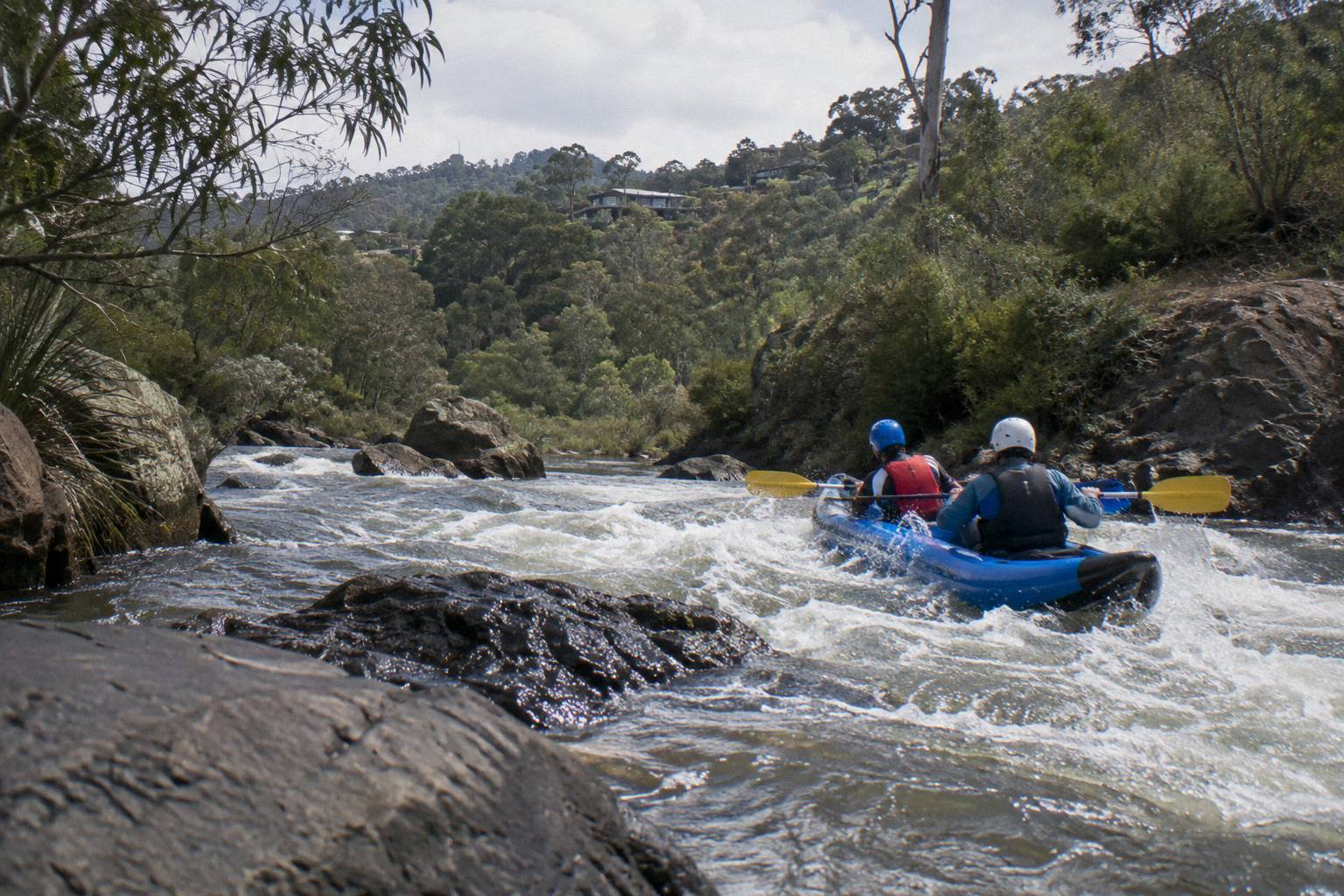
The real framing of the question is about conditions, not luck. A guided paddle on the Yarra through the CBD, or a sea kayak in the Portsea sanctuary, is a different activity from paddling whitewater at Wonga Park, and the equipment lists reflect that. The whitewater trip is the only one of these trips that includes a helmet alongside the lifevest, which tells you the operator treats rock contact as a real possibility on that water and plans for it.
None of that is a promise. The weather, the water level and the group on the day decide what a trip feels like, and no operator can promise anyone a dry seat or an upright finish. What you can do is pick the format that matches your confidence, wear what is supplied, and ask the operator the right questions before you book. Each of those pieces follows, using only what the operators and the safety authorities state.
Start with the format question, because it does most of the work in answering the capsize worry. The guide to choosing between kayak hire and a guided trip is useful here: a guided trip with a training component and a guide on the water is the beginner's format by design.
What Kind Of Kayak You Are Actually In
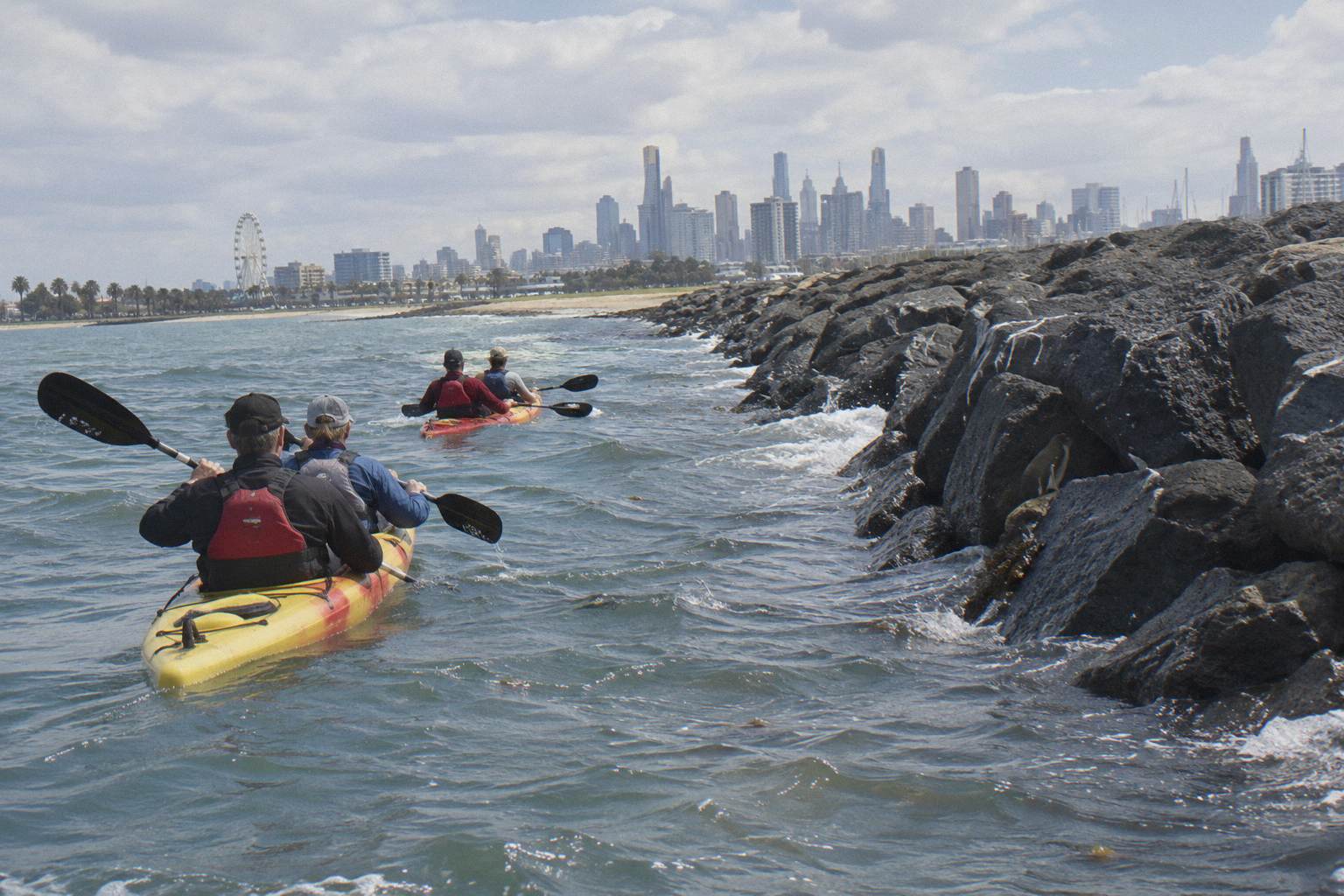
Every Kayak Melbourne trip runs in a 2-person fibreglass sea kayak, and the operator states plainly on its FAQ page, "We do not use single kayaks", with solo guests paired alongside another paddler or a guide. That tandem design is a far more stable platform than the narrow single kayak most people picture, which is the single biggest reason capsizes stay rare on city trips.
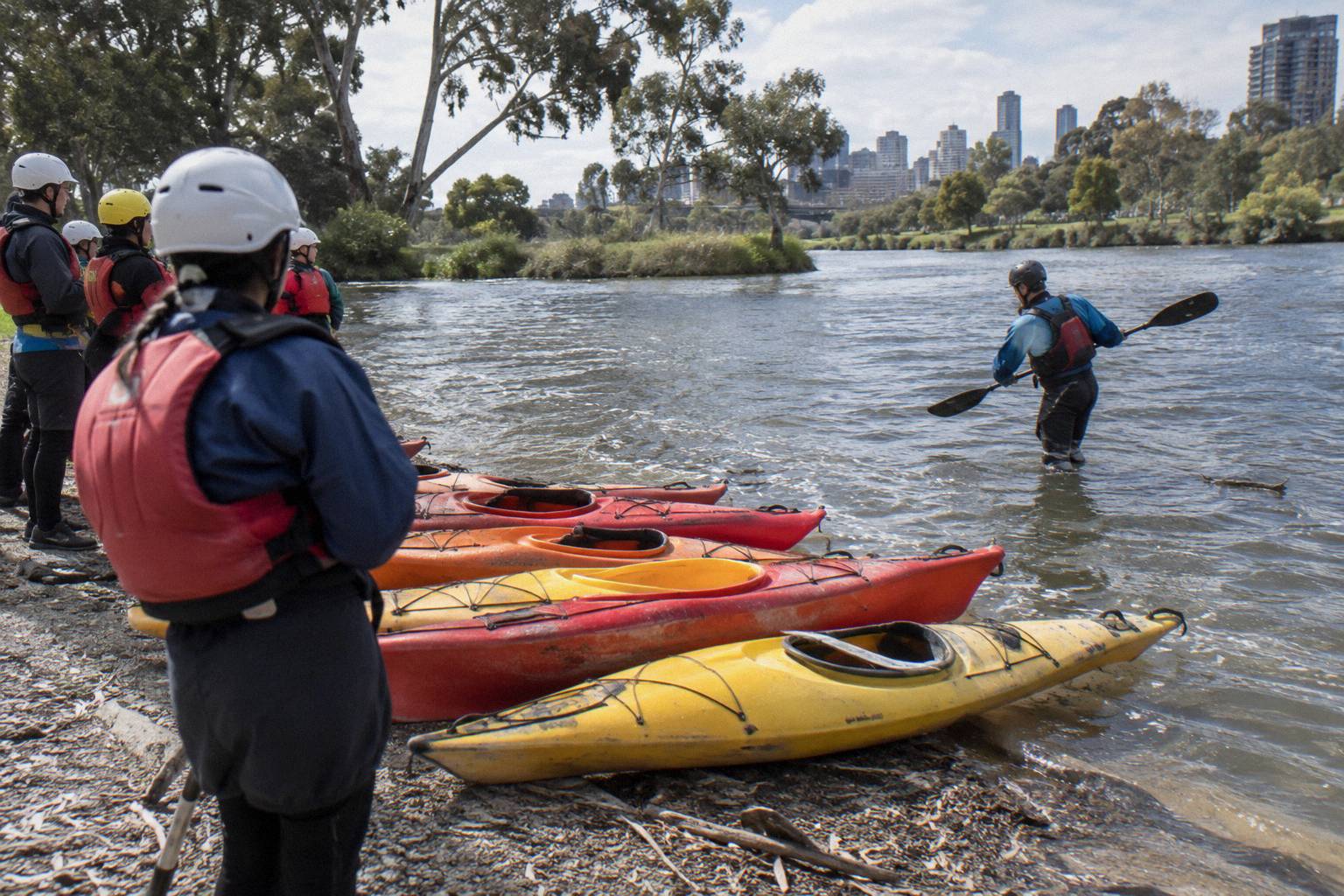
The FAQ wording matters because it is an operator design decision, not marketing. Kayak Melbourne has chosen a hull that trades speed for stability, and it staffs every departure with a guide who paddles with the group. The trip also begins with what the operator calls a training component, covering basic skills before the kayaks go anywhere, and the FAQ tells worried first-timers "Absolutely" when asked whether beginners can join, adding that anyone "somewhat active" will be fine.
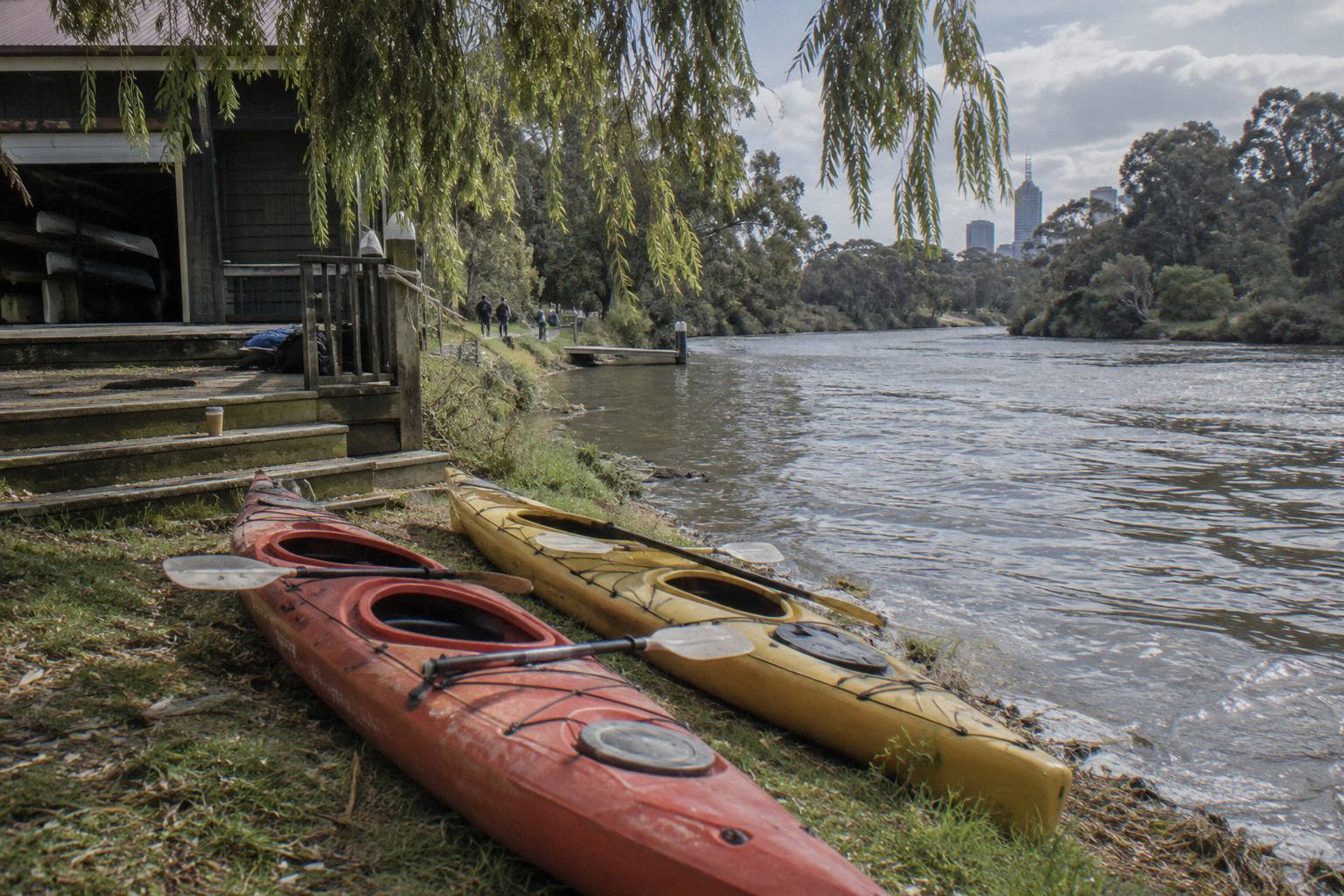
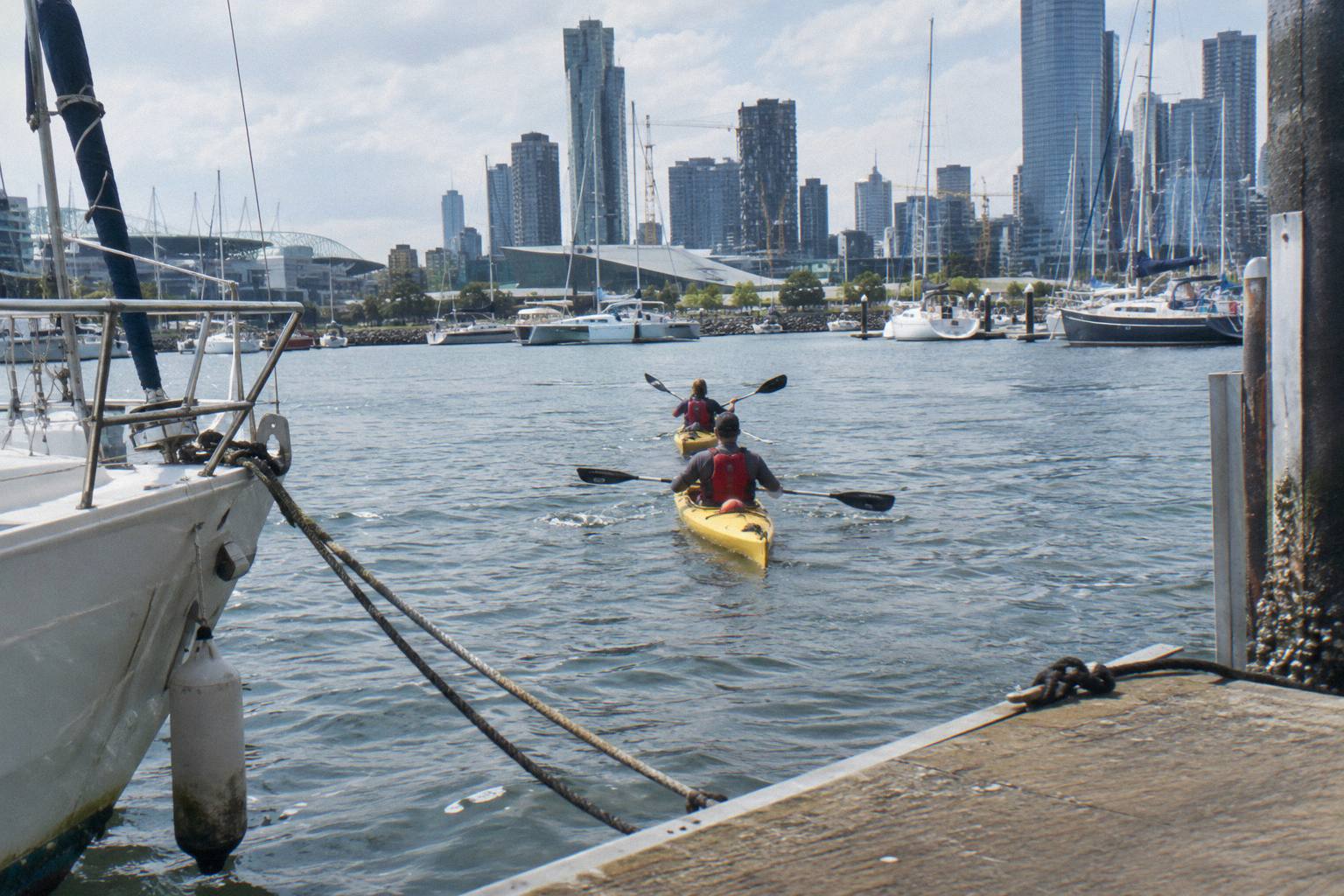
The other operators make comparable choices on their own waters. Sea Kayak Australia's Twilight Kayak on the Yarra supplies thermals, a spray jacket and all paddling equipment, plus a professional guide for its groups of up to 20. Up the Creek's Yarra Canoe Wildlife Paddle at Fairfield begins with a paddling introduction and supplies all paddling and activity equipment plus safety gear, in groups capped at 10. Bayplay's Dolphin Sanctuary Sea Kayak at Portsea includes safety equipment with life jackets and a driver-guide. The Apollo Bay Seal Kayak goes further and builds an hour and a half of instruction and touring into its 2 hour format, including surf safety and ocean awareness training, before anyone worries about the seals.
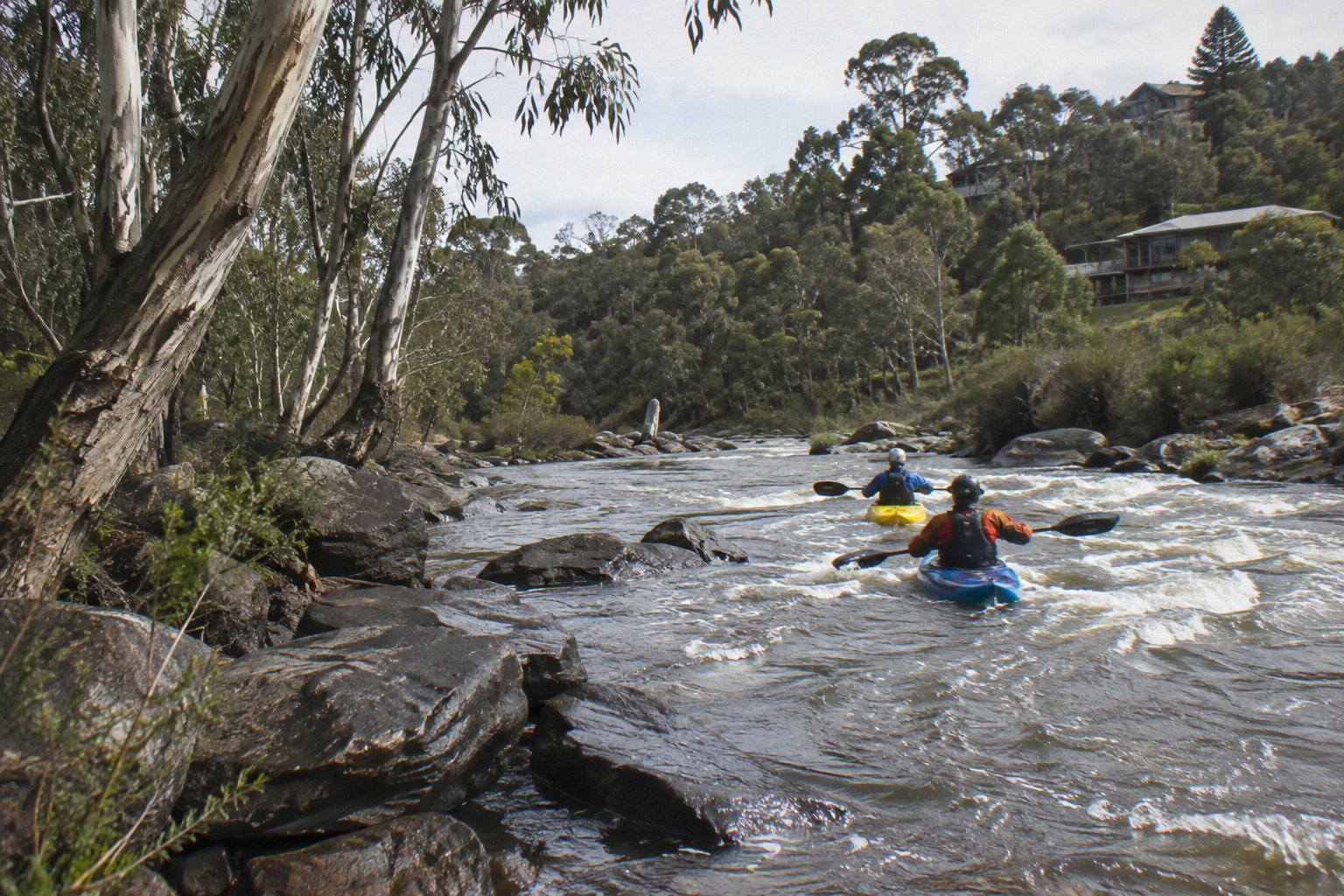
The one trip that assumes rougher water is The Adventure Merchants' Yarra Whitewater Kayaking at Wonga Park, from A$109 per person, which includes all equipment with a lifevest and a helmet, plus GoPro mounts on every helmet. A helmet on a kayak packing list is a clear signal: on moving water, the operator plans for the possibility of contact with rocks, and dresses every paddler for it. It runs 3 hours, minimum age 10, maximum weight 120 kg, self-arrival at the Lower Homestead Road car park launch, with a shuttle back to your car included and no hotel pickup. All amounts are in Australian dollars.
If the whitewater format is the one that attracts you, the full trip page for Yarra Whitewater Kayaking, Wonga Park sets out what is included, and you can check availability at the same time. Free cancellation up to 24 hours applies on the booking page, same as every other trip covered here.
What Victorian Safety Rules Require On The Water
Victorian law requires you to wear a life jacket at all times while paddling a kayak, on every class of water in the state. Safe Transport Victoria accepts Level 100, Level 50 or Level 50S jackets on coastal, enclosed and inland waters, the 400-metre-from-shore exemption covering paddleboards, kiteboards and sailboards does not apply to kayaks, and every operator covered here supplies the jacket.
The practical meaning for a nervous paddler is simple: even in the unlikely event of a capsize, you are wearing flotation from the moment you sit in the kayak to the moment you step out. The guided format adds a guide on the water whose job includes exactly this situation. You can read the rules yourself on the Safe Transport Victoria kayaks and canoes page.
Safe Transport Victoria also advises offshore paddlers to carry a phone in a waterproof pouch, a VHF radio or personal locator beacon, first aid, water and food, warm clothing and a repair kit, and to practise capsize recovery. That advice is aimed at independent sea paddlers, not guided groups, but it tells you the authority treats capsize recovery as a learnable skill rather than a catastrophe, which is the right frame for a beginner. On the guided trips the guide carries the responsibility and the kit; the operators supply the life jackets and, on the whitewater trip, the helmet.
The rules on the water matter too once you leave the river. Port Phillip Bay carries a transit only zone from Point Gellibrand at Williamstown south to latitude 38 south, where small boat operators must not anchor, moor, drift or fish, and the shipping channels are flagged as a high hazard with advice to exercise caution and steer well clear. The Safe Transport Victoria handbook sets these out in full. Guided bay trips plan around such zones; if you ever paddle the bay independently, you need to know them yourself.
For the questions the kayak page does not answer here, such as registration and licence specifics, that same Safe Transport Victoria page is the authority to read directly rather than relying on second-hand summaries.
City Sights Kayak, Yarra CBD, the shortest of the city trips at 1 hour 45 minutes and from A$82 per person, rated 4.9 from 162 reviews, is a sensible first paddle if the capsize question is what has been holding you back: minimum age 10, no experience needed, all paddling equipment and a guide included, self-arrival at Boathouse Drive.
How Wet You Get, According To The Operator
According to Kayak Melbourne's FAQ, you generally won't get wet, apart from a slightly damp midriff or bottom if it is very windy or raining, so the expectation is spray rather than swimming; no special clothing is required, just weather-appropriate gear and a change of clothes, while Sea Kayak Australia supplies thermals and a spray jacket on its Twilight Kayak.
The fuller version of that answer sits in a separate article on whether you get wet on a Melbourne kayak trip, including what the spray jacket actually covers in cooler months. The short version: the driest seats are in the middle of the group, the wettest conditions are wind and rain rather than the river itself, and a change of clothes in the 45 L dry bag the operator supplies covers the realistic worst case on a city tour.
Different waters, different expectations. The table below collects what each operator states about equipment, training and group size, which are the three factors that bear on how likely an unplanned swim is.
| Trip | Operator | Equipment stated | Training stated | Group size |
|---|---|---|---|---|
| Sunset Kayak With Dinner, Docklands | Kayak Melbourne | Paddling accessories, waterproof bags, 2-person sea kayaks | Basic skills instruction before departure | 18 |
| City Sights Kayak, Yarra CBD | Kayak Melbourne | All paddling equipment, secure storage | Basic skills instruction before departure | 18 |
| Twilight Kayak, Small Group | Sea Kayak Australia | Thermals, spray jacket, all paddling equipment | Professional guide on the water | 20 |
| Yarra Whitewater Kayaking, Wonga Park | The Adventure Merchants | Lifevest and helmet, GoPro mounts | Fully guided by experts | Ask the operator |
| Yarra Canoe Wildlife Paddle, Fairfield | Up the Creek | All paddling and activity equipment, safety gear | Paddling introduction | 10 |
| Dolphin Sanctuary Sea Kayak, Mornington Peninsula | Bayplay Adventure Tours | Safety equipment including life jackets | Driver-guide on the water | 24 |
A few rows deserve a note. The group size column shows the caps the booking pages state, and the whitewater trip's group cap is not published, so ask the operator when you book. The training column distinguishes between a formal instruction block, such as Up the Creek's paddling introduction or the Apollo Bay trip's surf safety session, and the guide-on-the-water model of the bay trips. Both models keep a professional with the group throughout.
Which Trip Suits A Nervous First-Timer
For a nervous first-timer, City Sights Kayak is the safest pick: it is the shortest trip at 1 hour 45 minutes, the cheapest at from A$82 per person, requires no experience, accepts children from age 10, and stays on the sheltered Yarra through the CBD. It carries a 4.9 rating from 162 reviews and allows free cancellation up to 24 hours before departure.
Match the format to the fear. If the worry is falling in, the flat-water city trips answer it with a stable tandem hull, a training component and a life jacket. If the worry is cold, Twilight supplies thermals and a spray jacket, and there is a full article on whether it is cold on the water on a Melbourne kayak trip. If the worry is holding the group up, the smaller caps matter: the Fairfield canoe paddle takes 10 people, the two Kayak Melbourne city trips take 18, and there is a separate piece on how big groups run on a kayak trip.
For the wildlife and sea formats the calculus changes without becoming forbidding. The Dolphin Sanctuary Sea Kayak at Portsea is a 3 hour sea kayak trip with a driver-guide and safety equipment, in groups of up to 24; the operator's page promises "the opportunity to spot" Burrunan dolphins, Australian fur seals and fairy penguins, and an opportunity is exactly what it says, never a guarantee. Wildlife rules back this up: Victorian law keeps boats at least 100 m from dolphins, and it is illegal to touch or feed seals or dolphins, so a guided trip is the compliant way to be near them at all. The wildlife authority's marine mammal rules set out the distances.
The Apollo Bay Seal Kayak, about three hours from Melbourne at Marengo, is built around instruction: an hour and a half of the 2 hour format is tuition and touring with qualified guides, sit-on-top kayaks and training in surf safety and ocean awareness, with wetsuits, helmets and life jackets included. A sit-on-top kayak is the easiest hull in the world to climb back onto, which is precisely why operators choose it for ocean conditions. Apollo Bay is a destination in its own right rather than a Melbourne day trip, so plan it as part of a Great Ocean Road stop.
If you would rather stay on dry land while you decide, the penguin option is separate from kayaking altogether: about 1,400 little penguins use the St Kilda Pier and Breakwater, viewed from a boardwalk in free ticketed evening sessions run by Phillip Island Nature Parks, never from a kayak. The St Kilda penguins and kayak trips guide covers how the two fit one itinerary.
Weather, Cancellation And Who Decides If A Trip Runs
Kayak Melbourne says tours run "rain, hail or shine", but the operator decides when conditions are unsafe and will then offer a refund or reschedule. Guests must give at least 24 hours' notice to change a booking, with no refunds inside that window, and some trips state no weather policy, so ask the operator.
That structure answers the safety question the capsize question is really asking. The decision to run or not sits with the operator, whose guides read the water and the forecast professionally, not with a beginner guessing whether the conditions look manageable. A trip that runs is a trip the operator has judged within its format's limits, with the equipment list that format requires. The article on what happens when a Melbourne kayak trip is cancelled for weather works through the refund paths in detail.
The Bureau of Meteorology's Olympic Park station, on a 2013 to 2026 record, puts Melbourne's mean maximum at 26.8 °C in January and 14.5 °C in July, with annual rainfall of 577.7 mm spread over 88.4 rain days, roughly one day in four. That is the background against which "rain, hail or shine" gets tested, and it is why the operator lists a spray jacket or deck in cooler months rather than cancelling. For the bay, the EPA Beach Report publishes daily water quality forecasts for Port Phillip Bay sites, updated at 3:00 pm in summer, which is the check worth making before any sea trip.
One point on the river itself: paddling on the Yarra is secondary contact with the water, not swimming. Melbourne Water's Yarra Watch monitors E. coli at Launching Place, Healesville, Warrandyte and Kew, quality varies dramatically with rainfall, and the CBD stretch has swimming bylaws. If a capsize ever did happen, you would climb back into the kayak with your guide's help; you would not treat the river as a place to swim. The Melbourne Water Yarra Watch page explains the monitoring.
City Sights Kayak, from A$82 per person and rated 4.9 from 162 reviews, is the shortest commitment among the city paddles and the one most often suggested to first-timers weighing the capsize question: 1 hour 45 minutes, ages 10 and over, all equipment and a guide included, meeting at Boathouse Drive across the river from Federation Square.
What To Ask The Operator Before You Book
Ask the operator five questions drawn straight from what they publish: what the pre-launch training covers, which kayak type runs on that water, what the guide does if a paddler capsizes, what weather threshold triggers running or cancelling, and what age, weight and swimming-ability expectations apply to your specific trip. Most operators answer these on their own pages or FAQ, and the rest can be asked by phone or message when you book.
Ask about the training component first, because it varies by format and it is where a beginner's confidence is built. Kayak Melbourne's tours begin with basic skills instruction; Up the Creek's canoe paddle begins with a paddling introduction; the Apollo Bay trip devotes most of its runtime to instruction and touring. Ask what it covers and how long it runs on the date you choose.
Ask about the kayak and the water. On the city trips the answer is a 2-person sea kayak on a sheltered river; at Apollo Bay it is a sit-on-top in ocean conditions; at Wonga Park it is a whitewater format with a helmet supplied. If the operator's answer does not match what you expected from the trip description, that is the moment to switch formats, not the moment to hope.
Ask what happens if someone does capsize. The whitewater trip's shuttle, the bay trips' driver-guide and the city trips' guide-on-the-water are all stated facts, and the Safe Transport Victoria advice to practise capsize recovery tells you it is a normal, plannable event in the sport, not an emergency. For Melbourne Kayak Tours, the covered formats span the calmest river paddle to the moving-water trip, so the question is worth asking for each one you are weighing.
| Question | Where the answer already exists |
|---|---|
| What kayak will I be in? | Kayak Melbourne FAQ: 2-person sea kayaks, no singles; Apollo Bay: sit-on-top kayaks |
| Is there training first? | Trip pages: basic skills instruction, paddling introduction, surf safety session |
| Is a life jacket supplied? | All eight trips include safety gear or life jackets; wearing is Victorian law |
| What is the minimum age? | 10 for City Sights and whitewater, 12 for the evening trips, ask for the others |
| What if the weather is bad? | Kayak Melbourne: rain, hail or shine, with safety cancellations refunded or rescheduled |
| What if I need to cancel? | Free cancellation up to 24 hours on the booking page, all eight trips |
The age row deserves care because the figures differ trip by trip and must not be generalised: 10 and over for City Sights and for the Wonga Park whitewater trip, 12 and over for the evening dinner and twilight formats, and ask the operator for the wildlife and sea trips, whose minimum ages are not published. The full article on minimum ages for a Melbourne kayak trip collects them in one place.
The Wonga Park trip, from A$109 per person, 3 hours with a 120 kg maximum weight and a 10-year minimum age, is the one format where the capsize question deserves a direct conversation with the operator before you book: it supplies helmet and lifevest, guides, and a shuttle back to your car, and its water level, rapid grade and season are not published, so ask what the river is doing on your date.
What Trips People Up Before A Guided Paddle
Most pre-trip trouble comes from small assumptions: expecting identical water and kayaks on every trip, missing the different minimum ages for day and evening paddles, assuming hotel pickup rather than self-arrival, believing bookings are never cancelled, forgetting prices are in Australian dollars and vary by date, and treating wildlife or the Crown fire show as guaranteed.
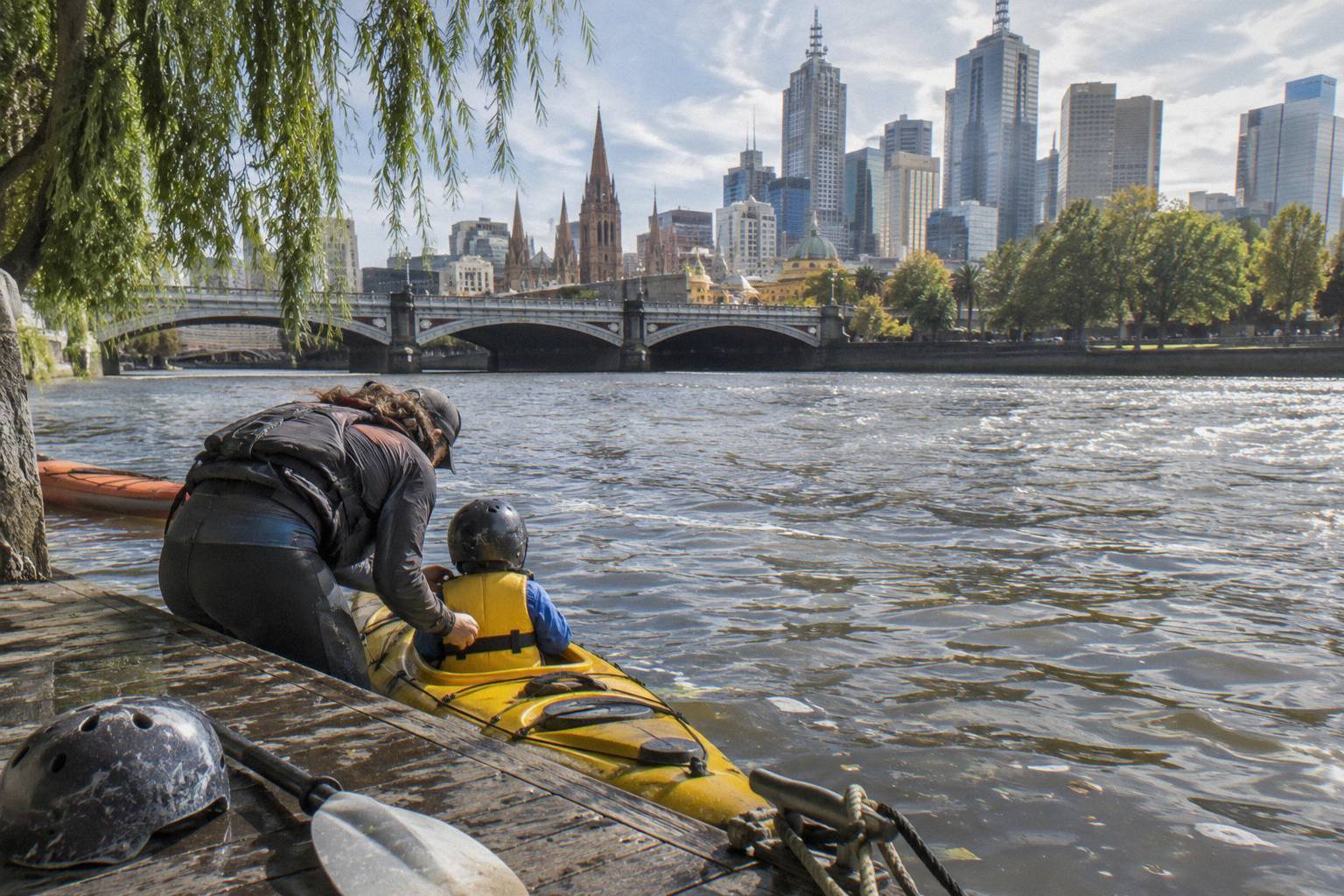
The pickup mistake is the most common. Every trip covered here is self-arrival: the evening dinner trip meets at the Community Boating Hub wharf at Docklands, while the day trips start and end at Boathouse Drive next to Princes Bridge, a five minute walk from Flinders Street station. There is no single address, so check your trip's meeting point specifically, and build travel time into the day with the day-around-a-kayak-trip planner.
The age mistake catches families. A 10-year-old can join City Sights with a participating adult but cannot join the evening dinner trip, which is 12 and over. The weather mistake catches everyone else: the operator's own words reserve the right to cancel if it is unsafe, and when it does, the remedy is a refund or a reschedule, so keep the evening after your paddle flexible rather than booked solid.
The wildlife mistake deserves its own line: Bayplay promises "the opportunity to spot" dolphins, seals and penguins, and the Crown fire show is timed around, never promised. The kayaking with dolphins near Melbourne guide and the seals guide set out what the operators actually say, which is the only version worth planning on.
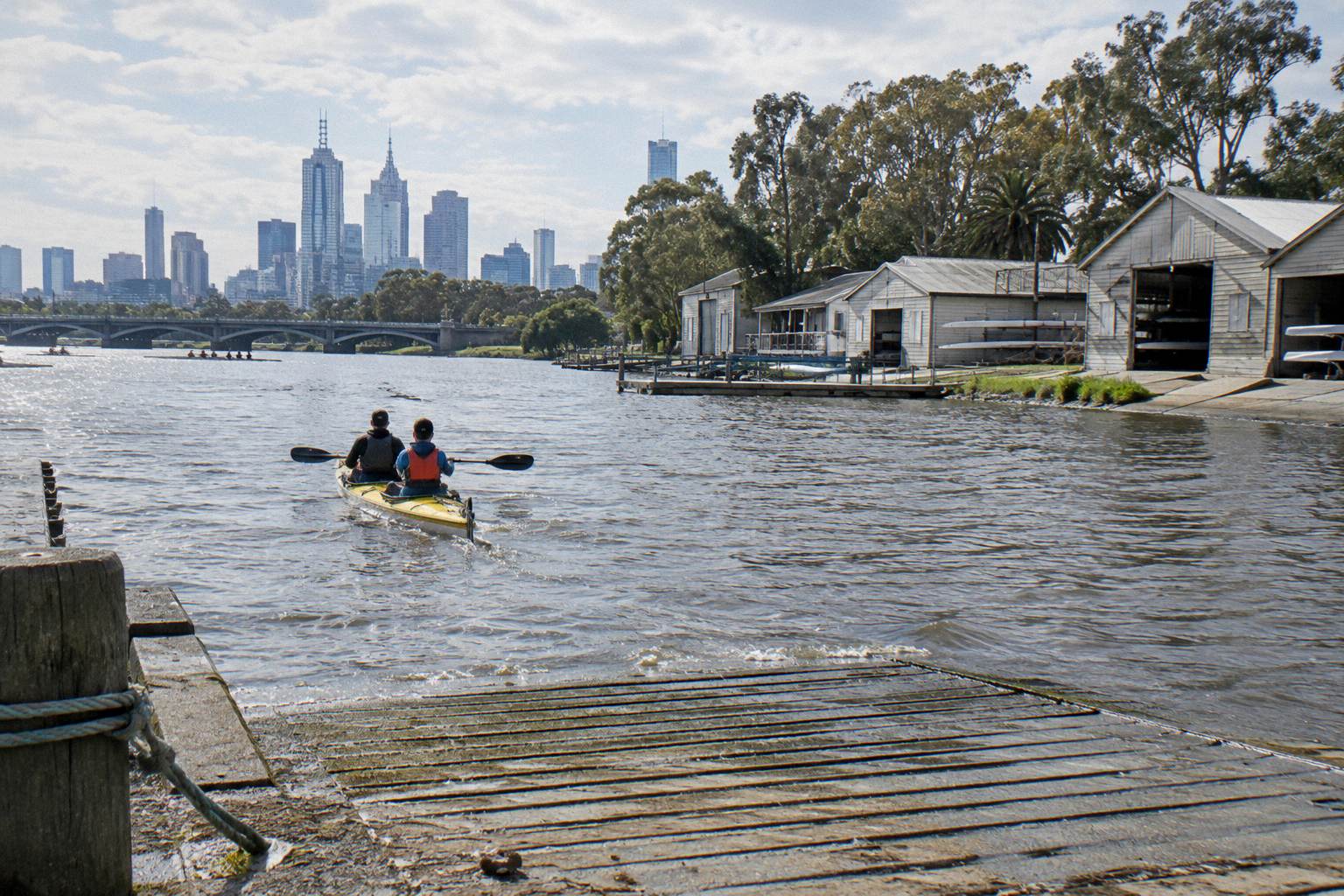
And the capsize worry itself comes down to this: stable tandem hulls, a training component, a life jacket you never take off, and a guide whose job includes you. That is the whole of what is stated, and it is enough to book on.
Common Questions About Falling Out Of A Kayak
Is It Common To Fall Out Of A Kayak On A Guided Trip?
No capsize statistic is published for guided trips, so no frequency claim can be made. The stated facts point to it being uncommon on the city trips: 2-person sea kayaks rather than singles, a training component before launch, and a life jacket worn throughout under Victorian law. The whitewater trip at Wonga Park is the one format that supplies a helmet.
Do I Need Experience To Join A Guided Kayak Trip In Melbourne?
No. Kayak Melbourne's FAQ answers the beginner question with "Absolutely" and says anyone somewhat active will be fine; every trip begins with a training component or runs with a professional guide on the water. The full article on experience requirements covers what to expect.
Will I Get Wet Even If I Stay In The Kayak?
Possibly slightly. The operator's FAQ says "Generally no, you may get a slightly wet midriff or butt if it's very windy or raining". Bring a change of clothes; the city trips supply 45 L dry bags for your gear.
Is A Life Jacket Compulsory On A Victorian Kayak Trip?
Yes. Safe Transport Victoria states "You must wear a lifejacket when paddling crafts such as a kayak, canoe, surf ski, raft, or rowboat" on all Victorian waters. The 400 m exemption covers stand up paddleboards and sailboards only, never kayaks, and every operator supplies the jacket.
Which Trip Should A Nervous Beginner Choose?
City Sights Kayak is the shortest and cheapest introduction: 1 hour 45 minutes, from A$82 per person, ages 10 and over, no experience needed, on the sheltered Yarra. The beginners' guide to kayaking in Melbourne compares the options.
What Happens If The Weather Turns Bad On The Day?
Kayak Melbourne says tours run "rain, hail or shine" but reserves the right to cancel if unsafe, with a refund or reschedule when it does. Booking-page terms give an alternative date or full refund for weather cancellations on the city and twilight trips; the others state no weather policy, so ask when you book.